Slab City, California, often dubbed "The Last Free Place," is an off-grid squatter community located in the Sonoran Desert, near the Salton Sea. Originally a World War II Marine barracks, it has transformed into a haven for artists, outcasts, and those seeking alternative lifestyles.
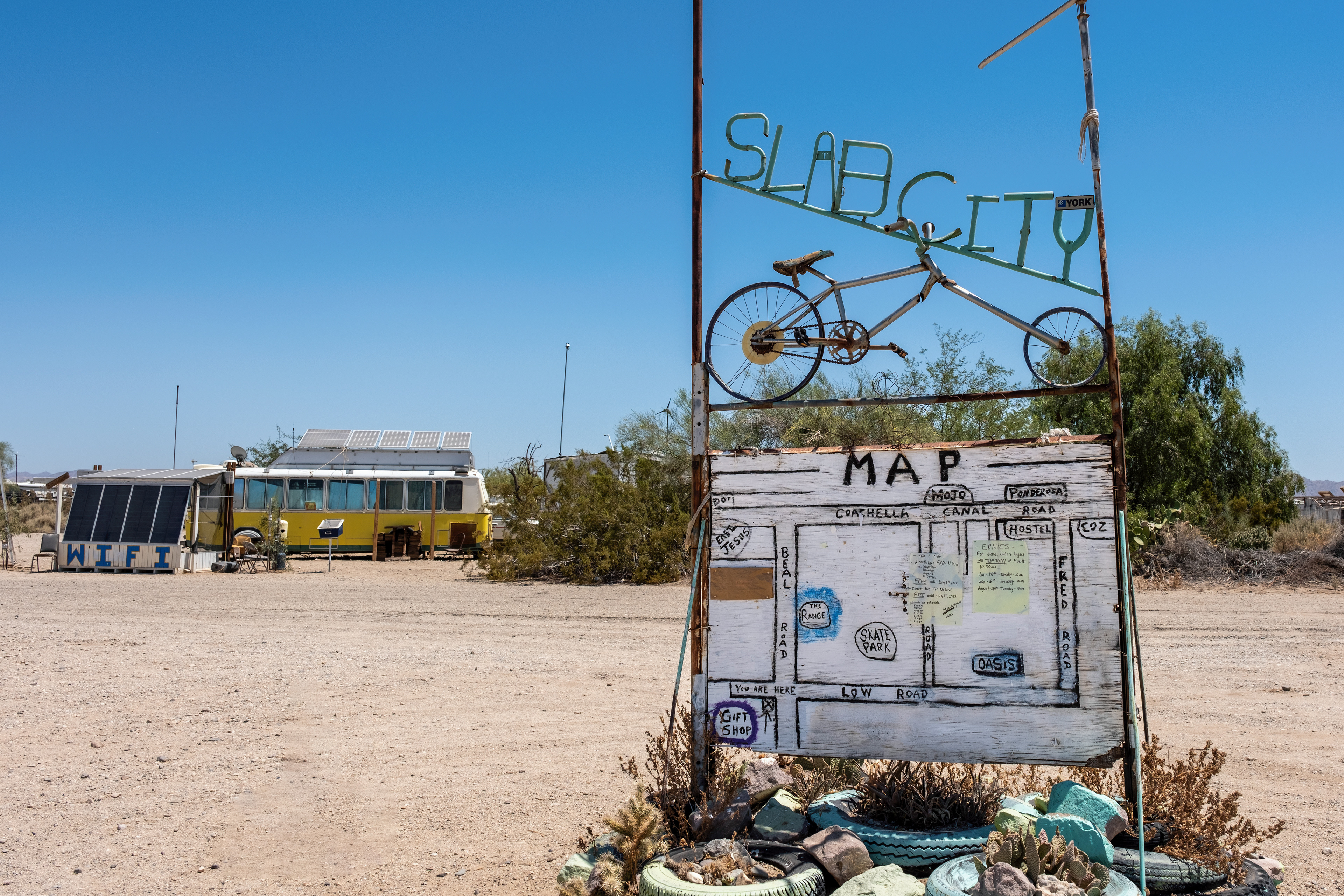
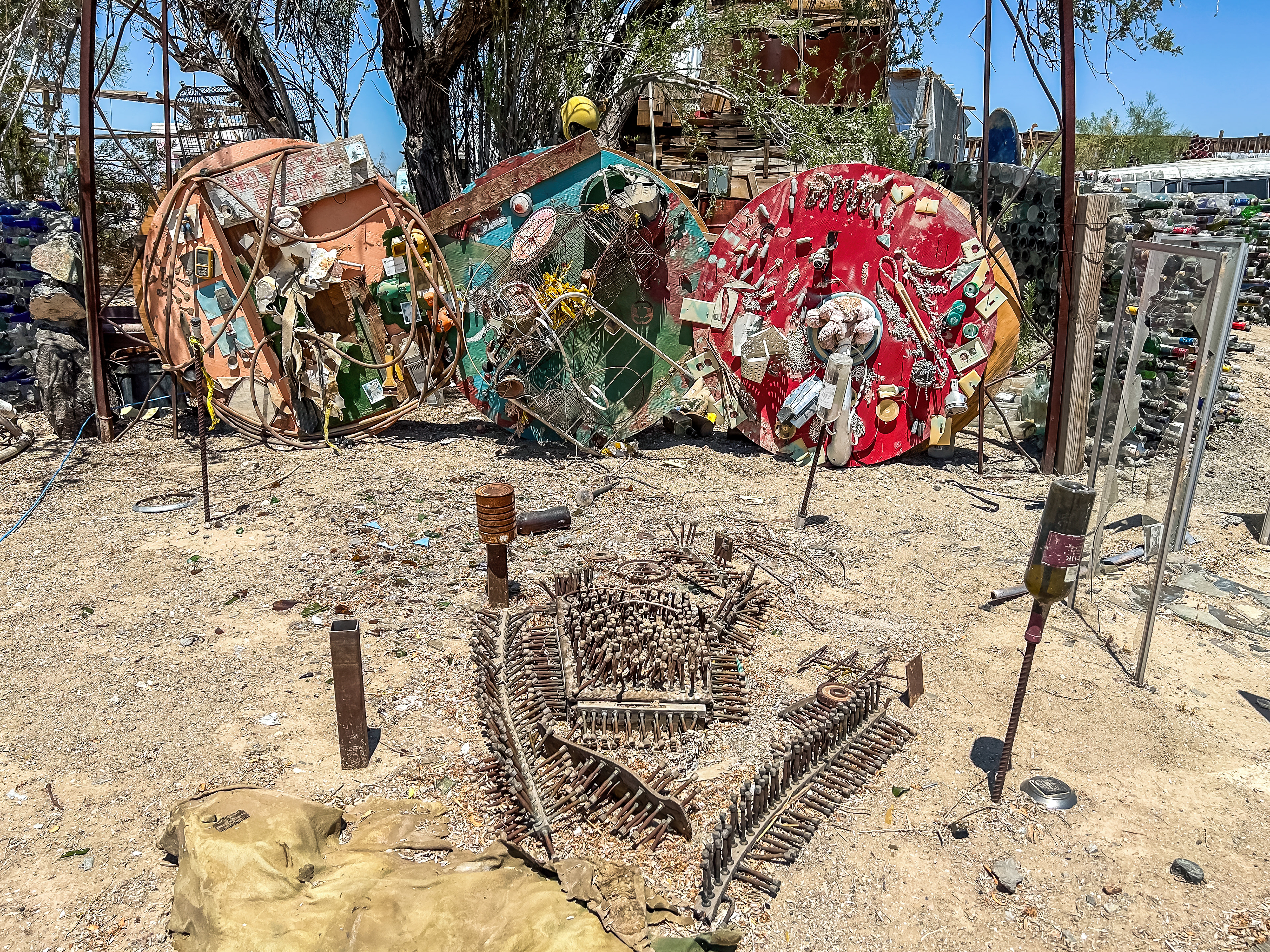
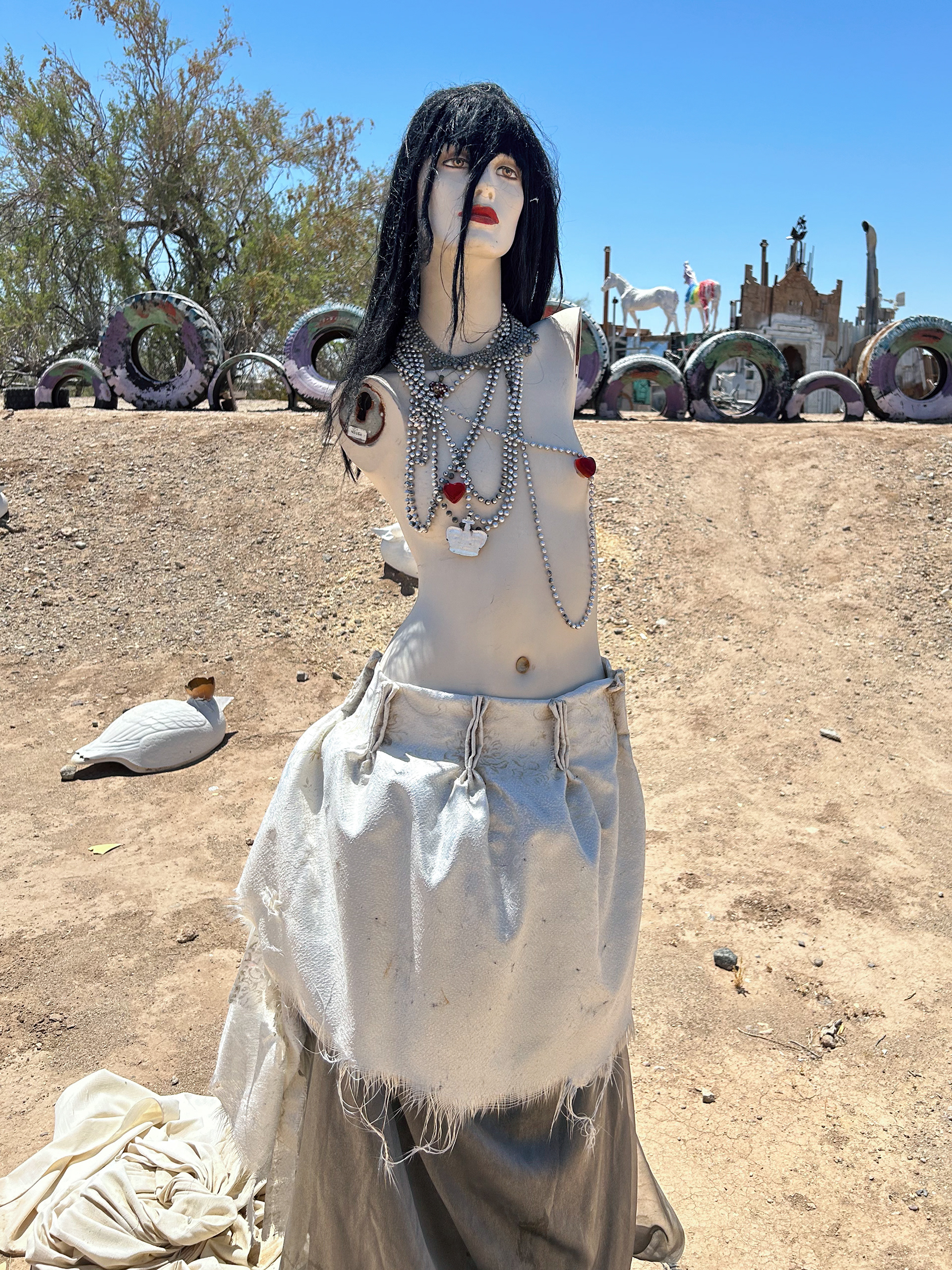
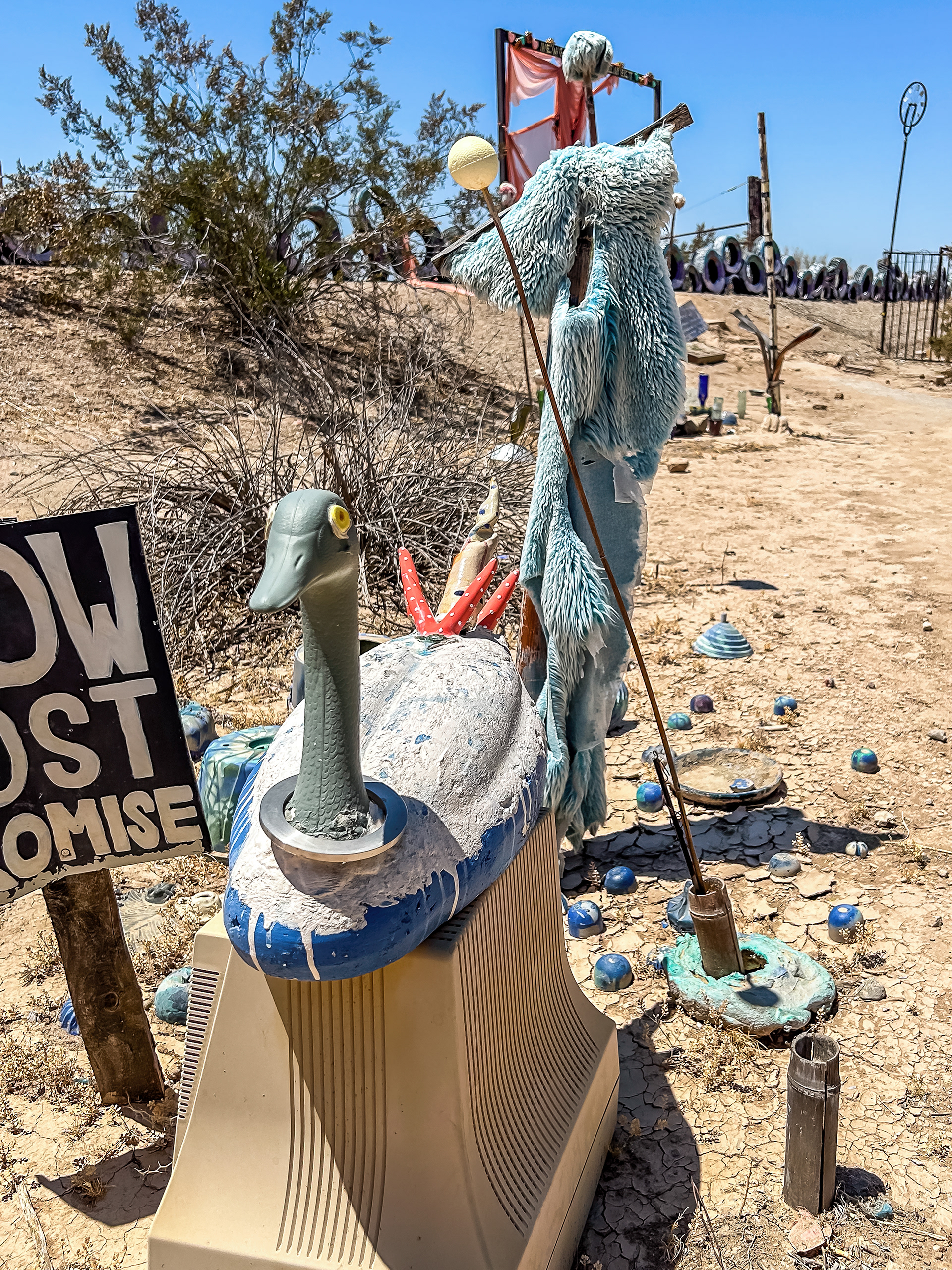
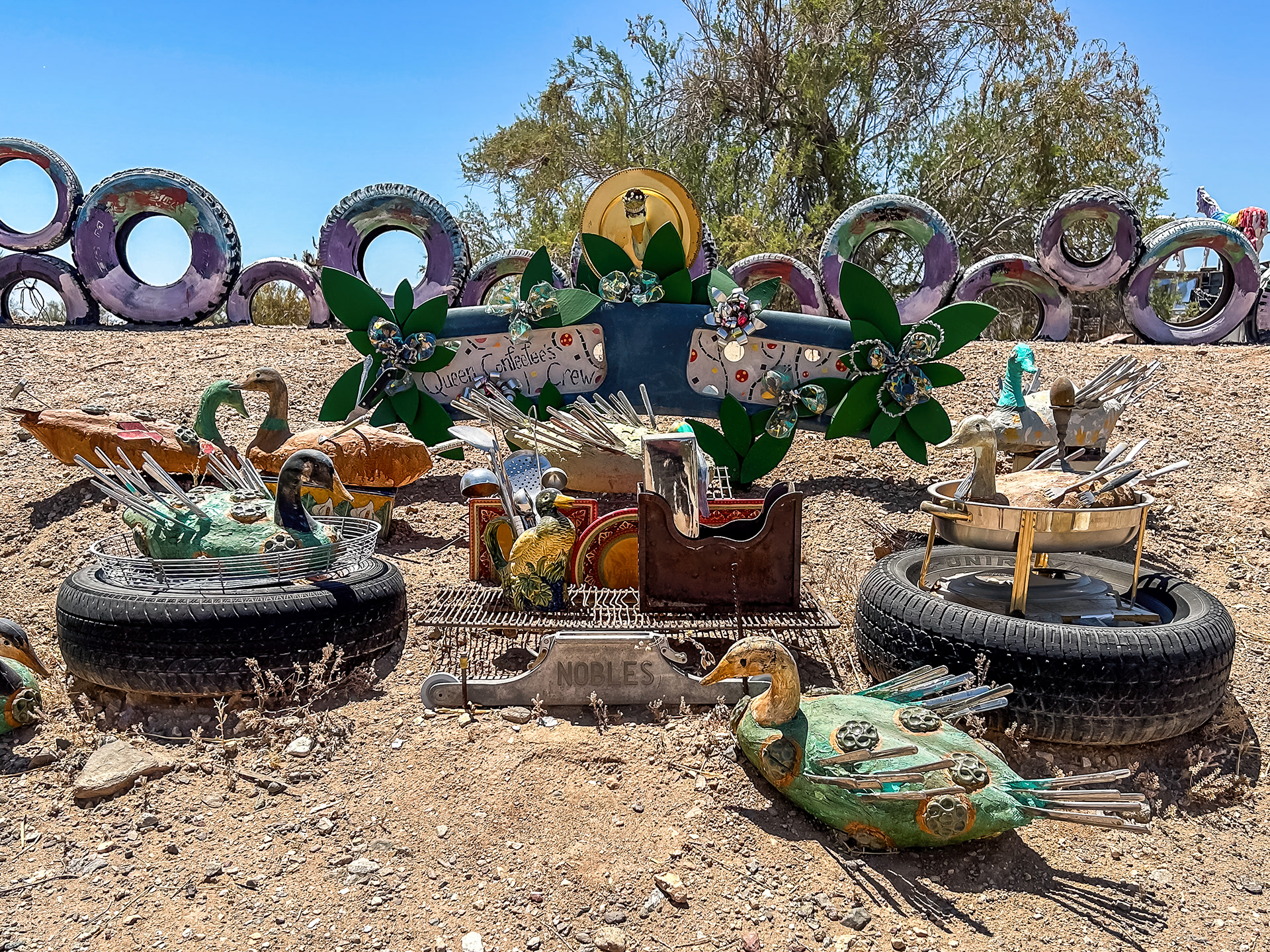
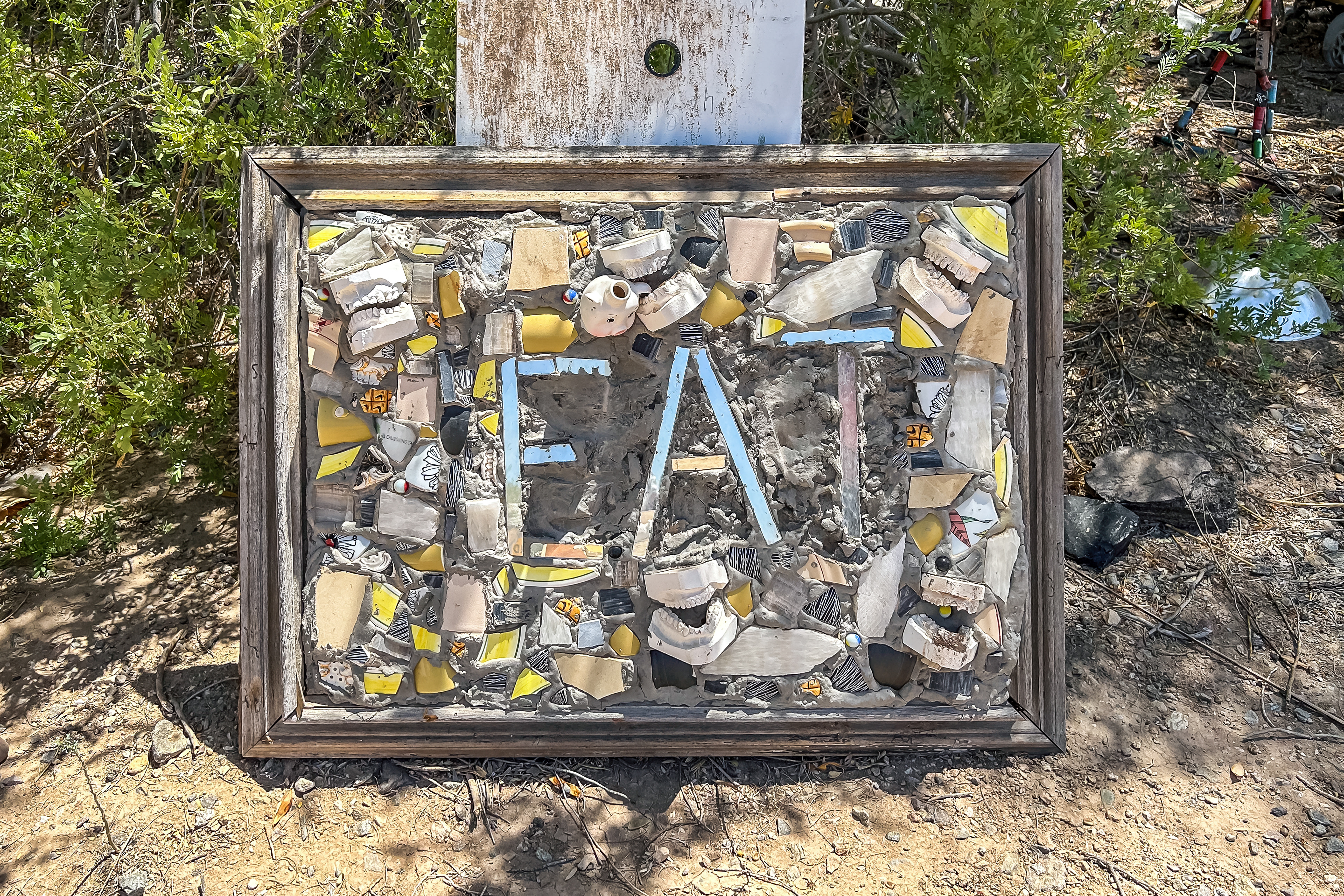
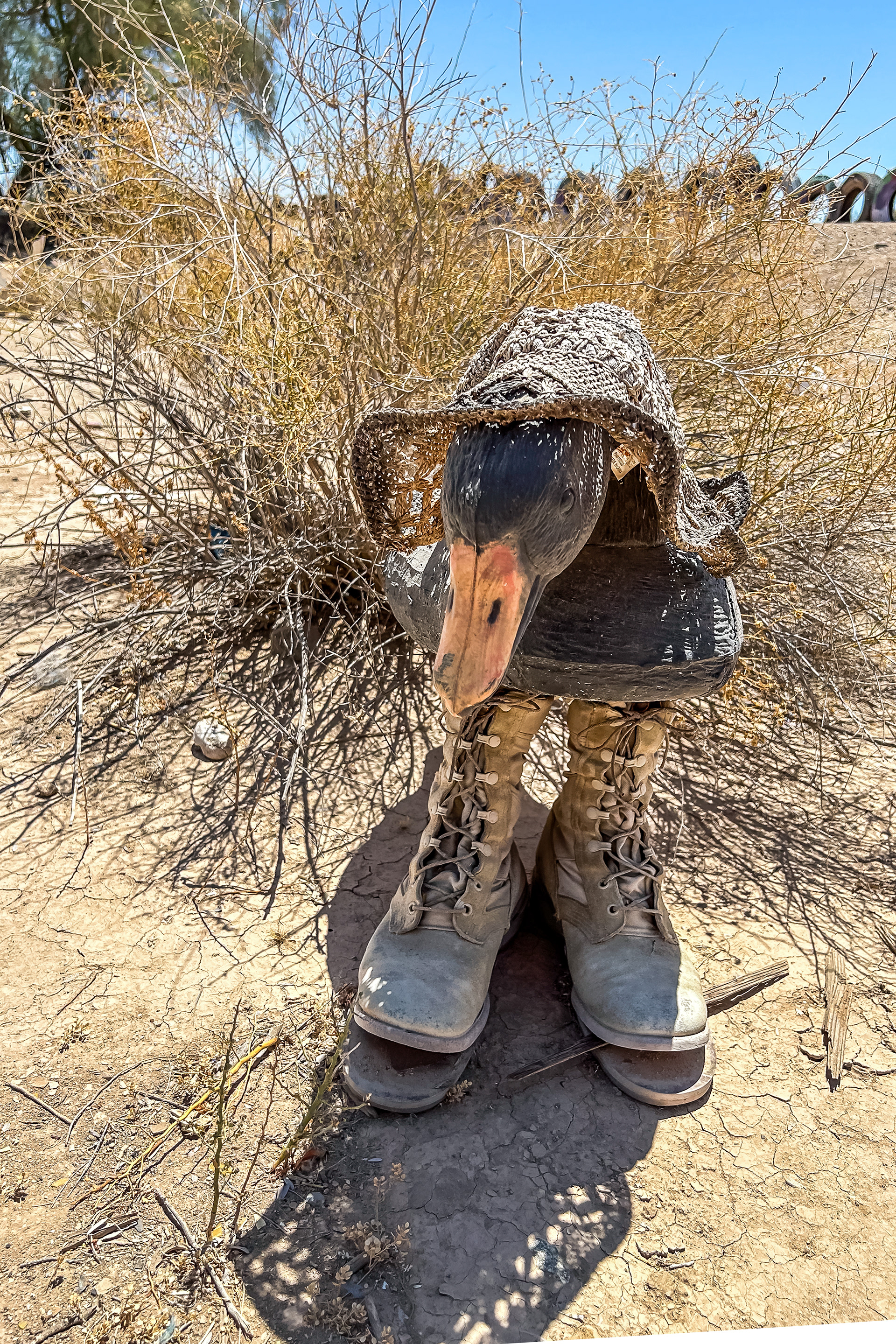
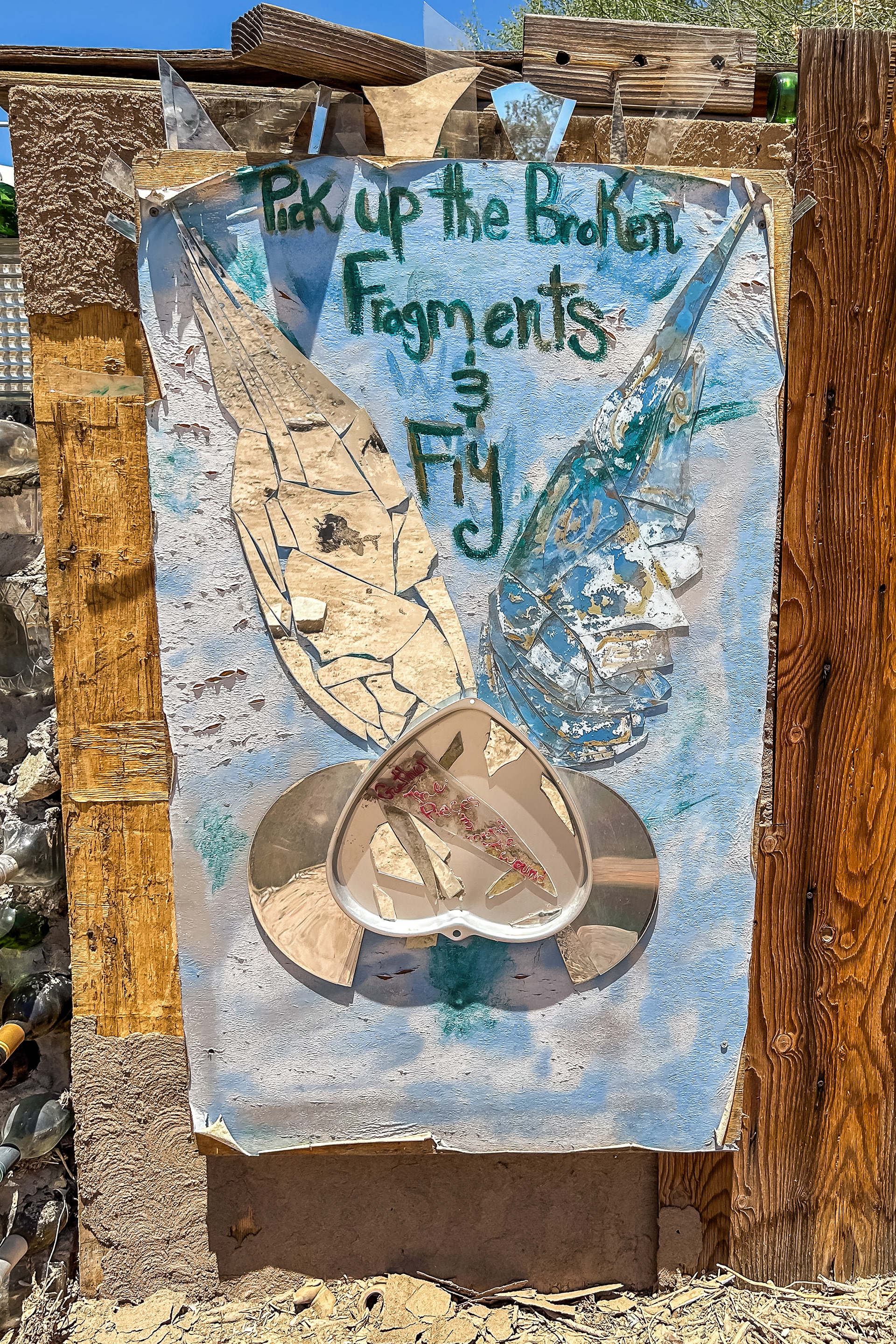
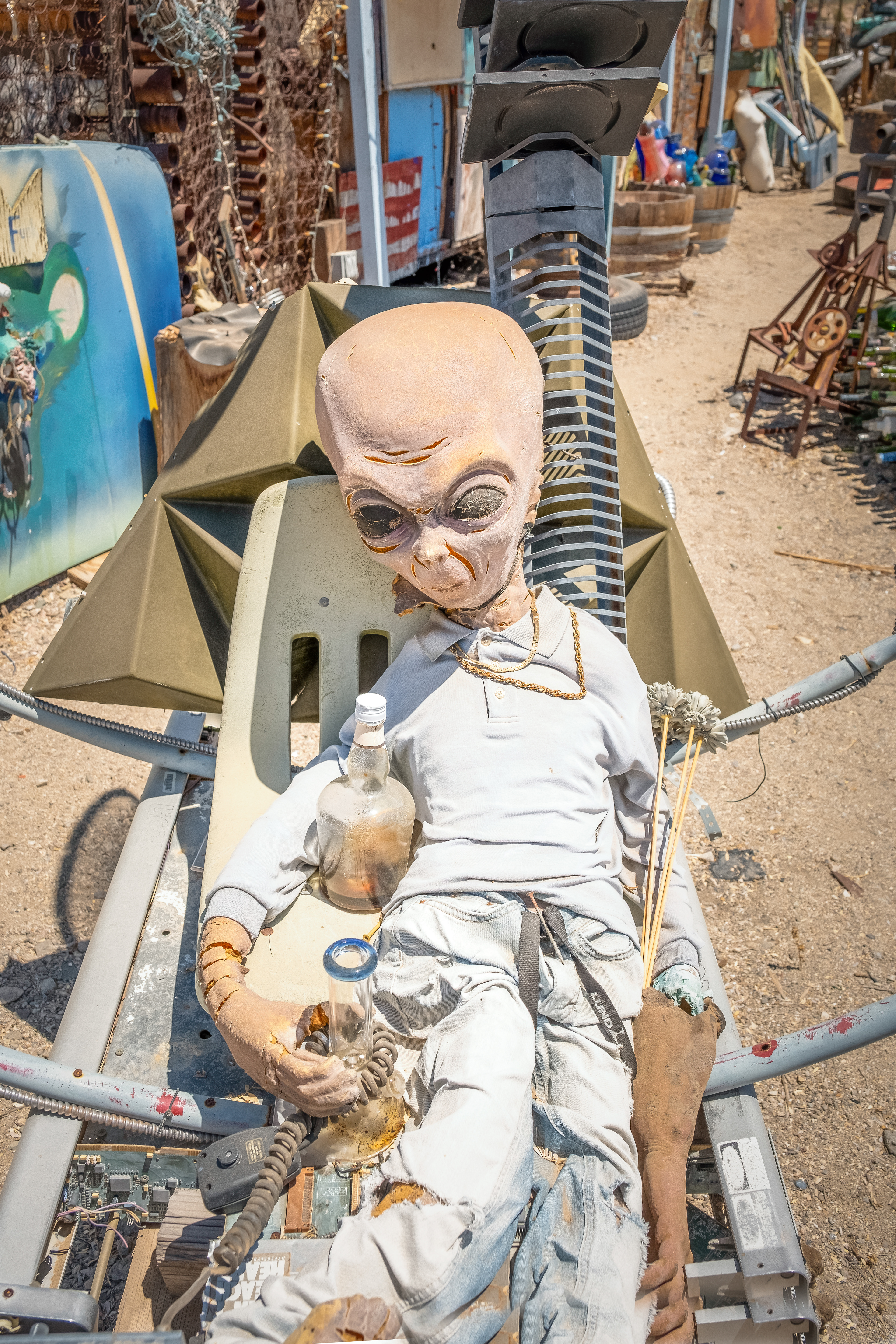
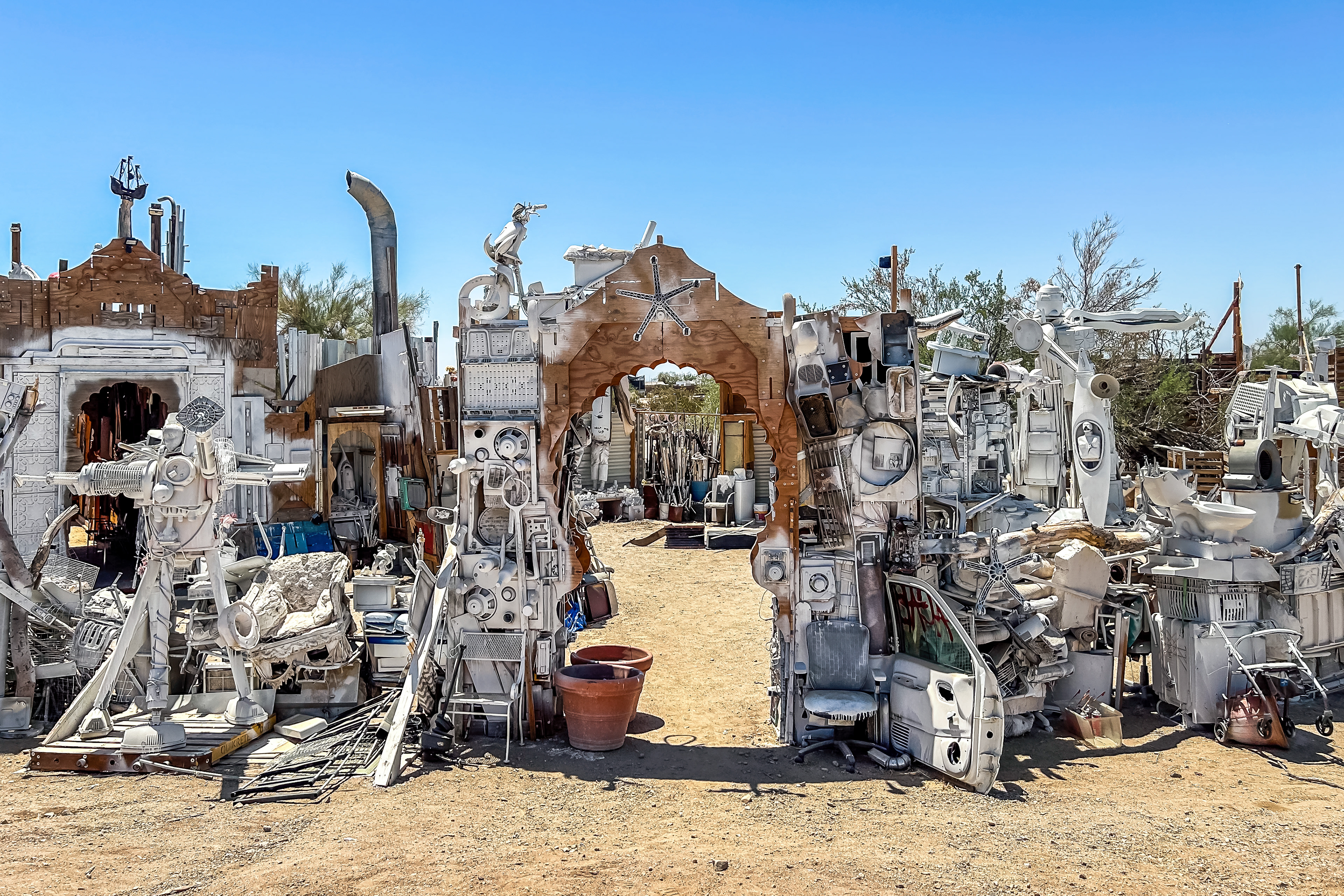
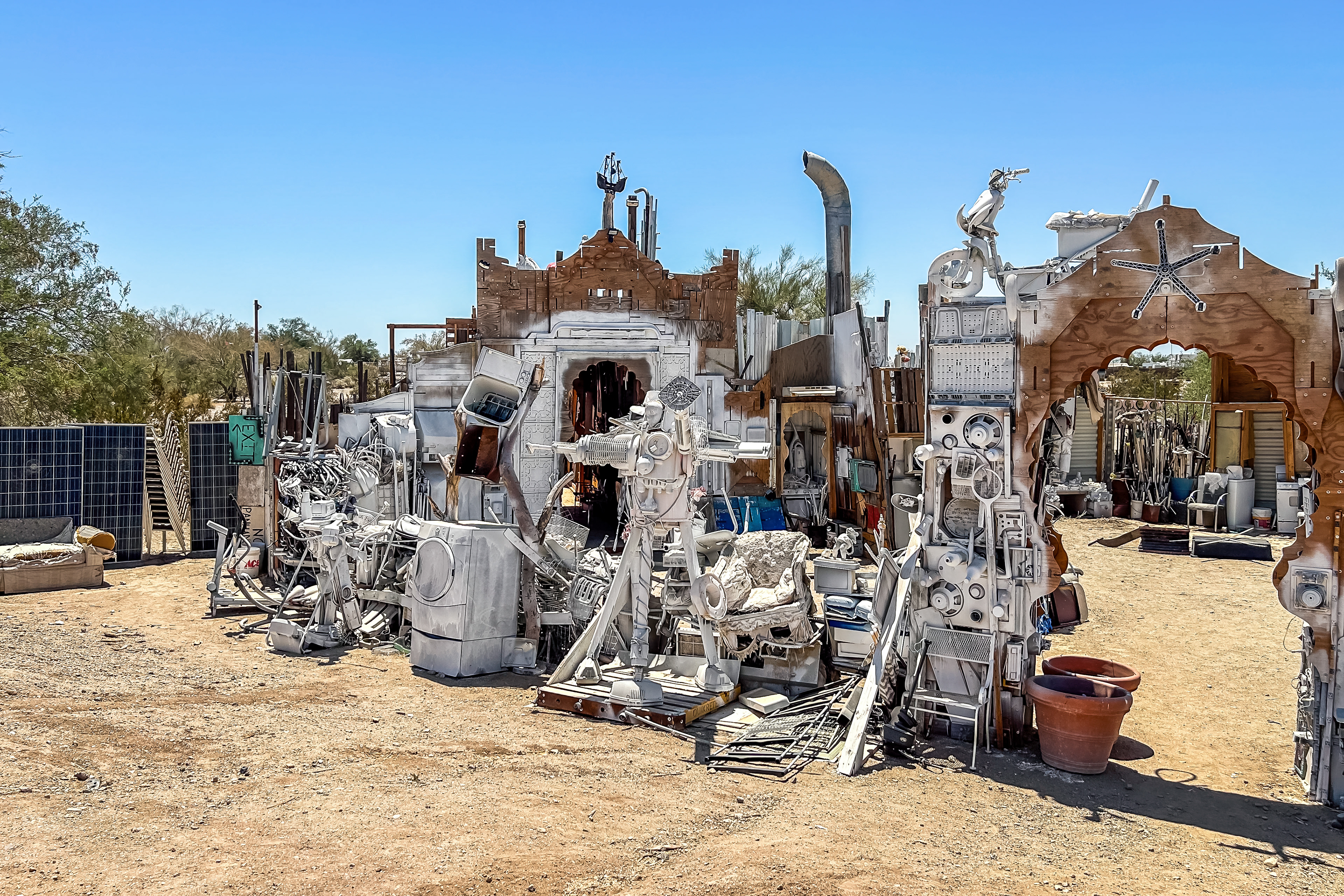
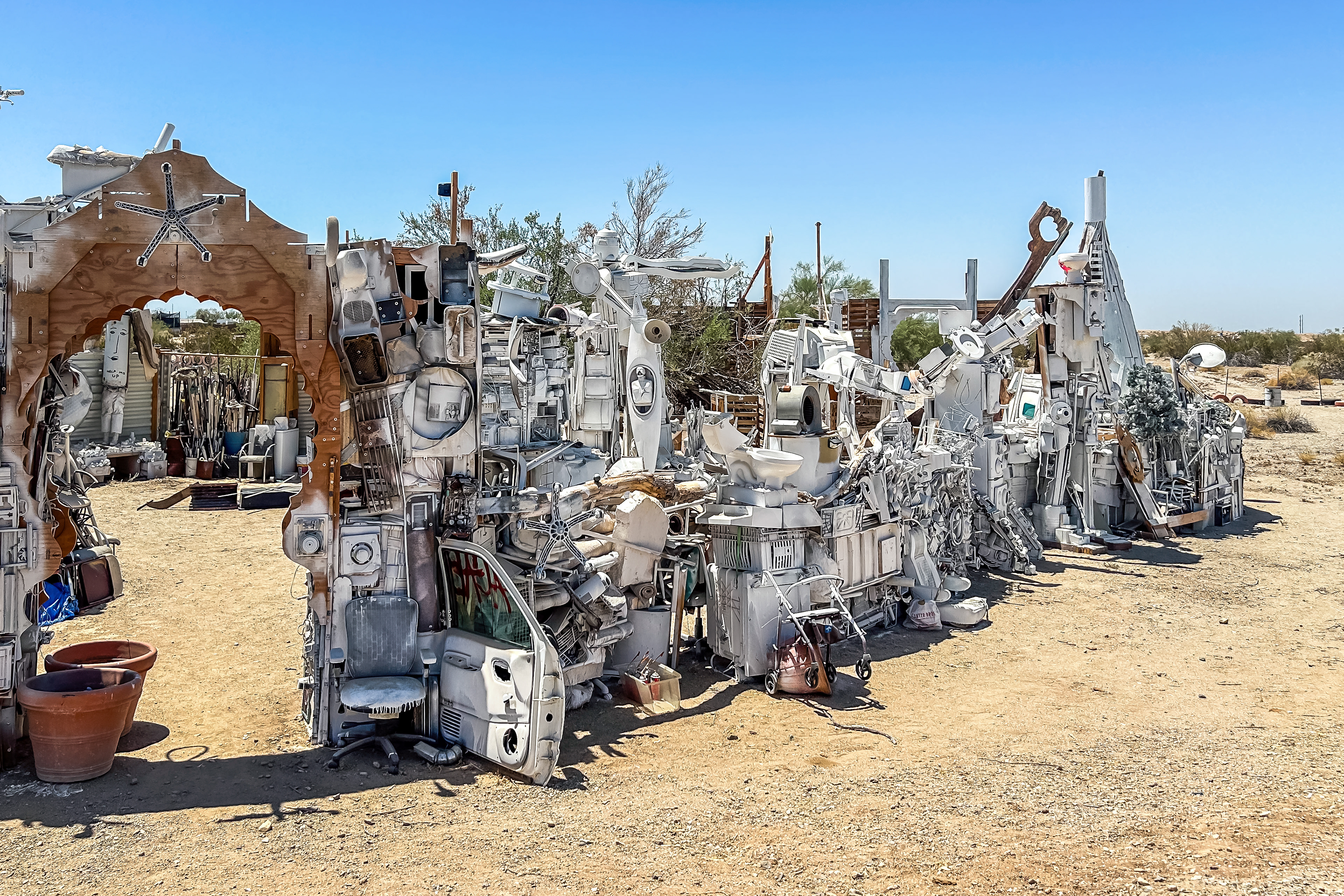
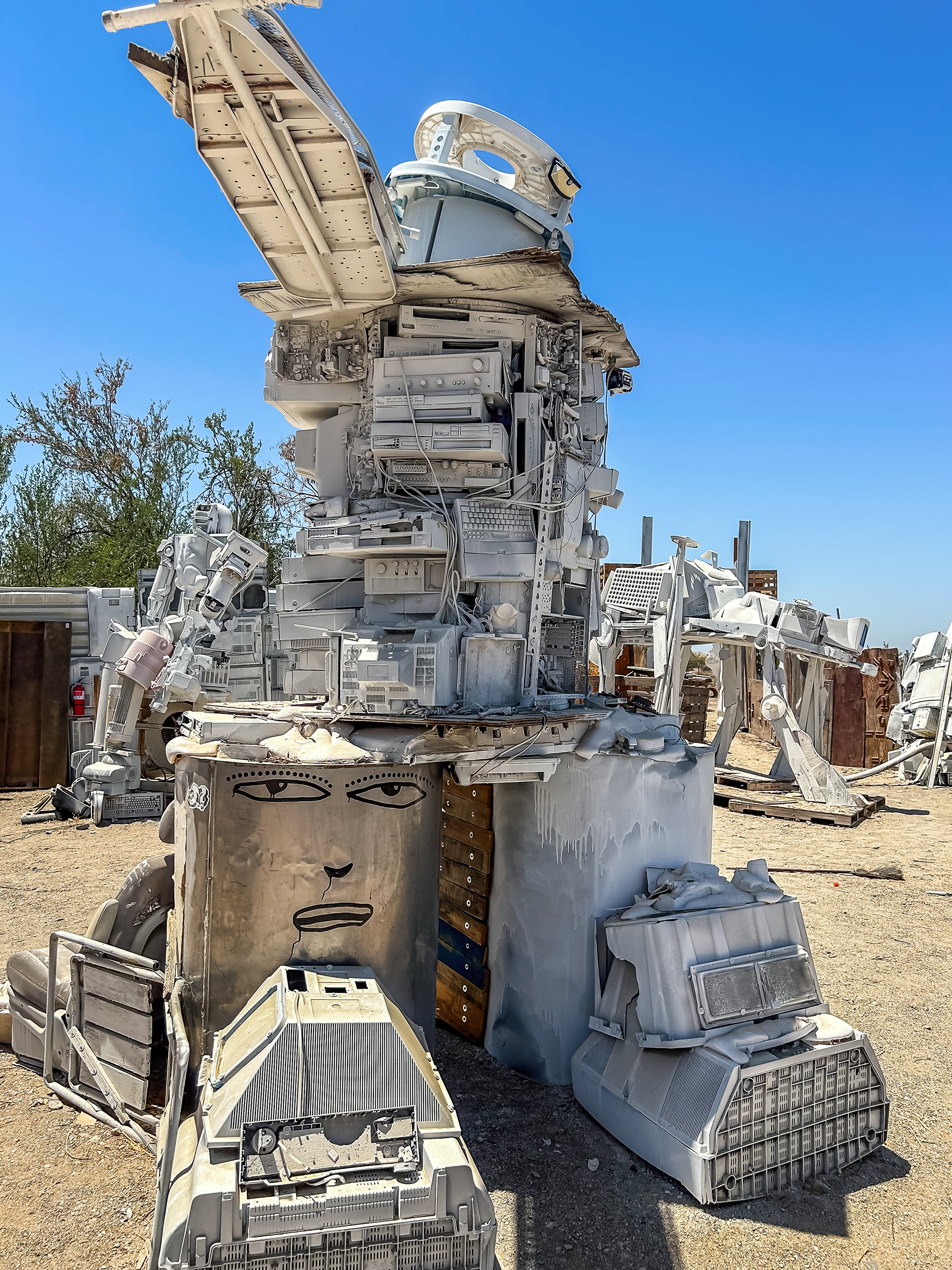
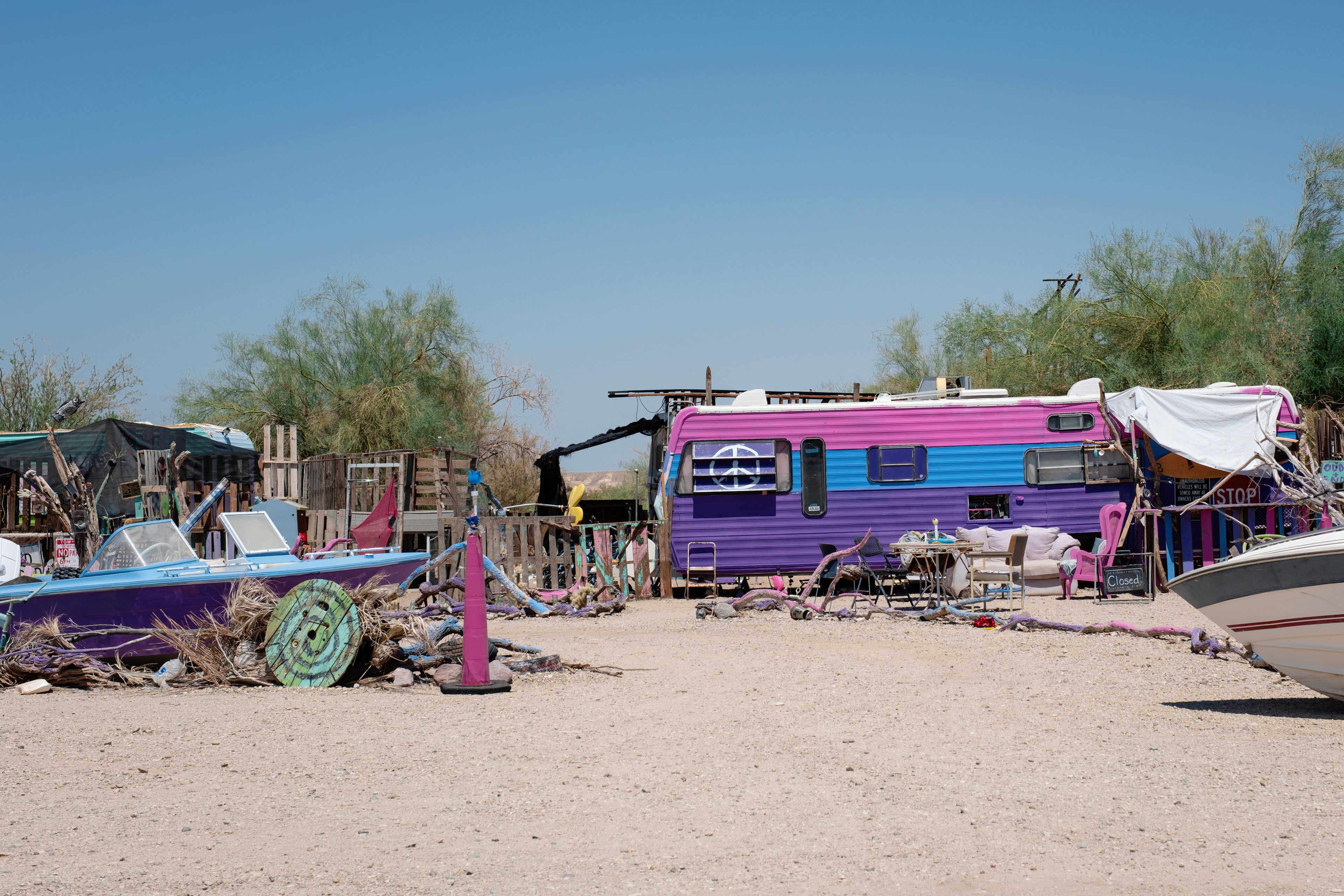
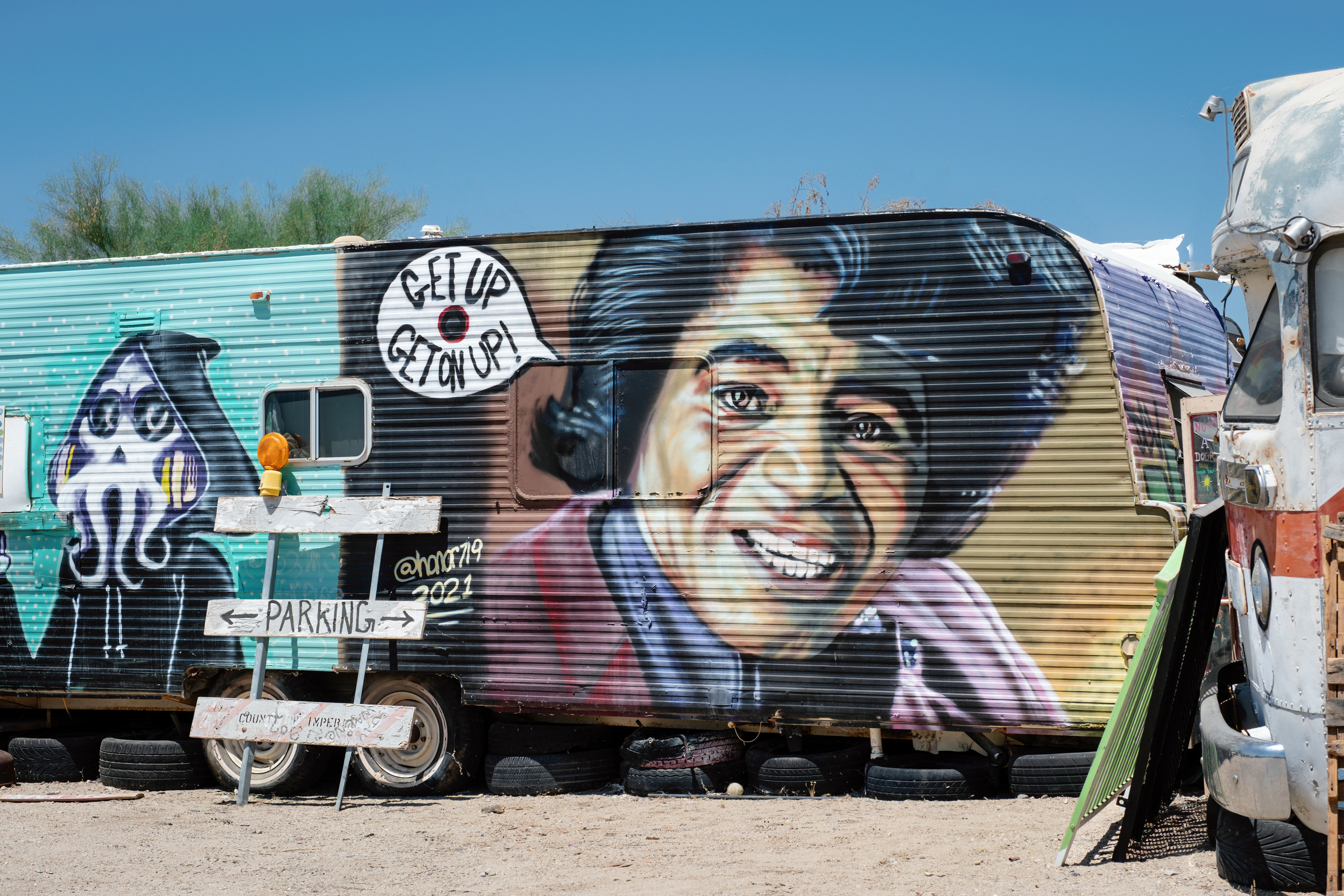
The community is known for its unique and colorful painted art. East Jesus, is an outdoor art garden filled with eclectic sculptures. Slab City operates without formal infrastructure, lacking running water, electricity, or sewage systems, but thrives on the principles of freedom and self-reliance.
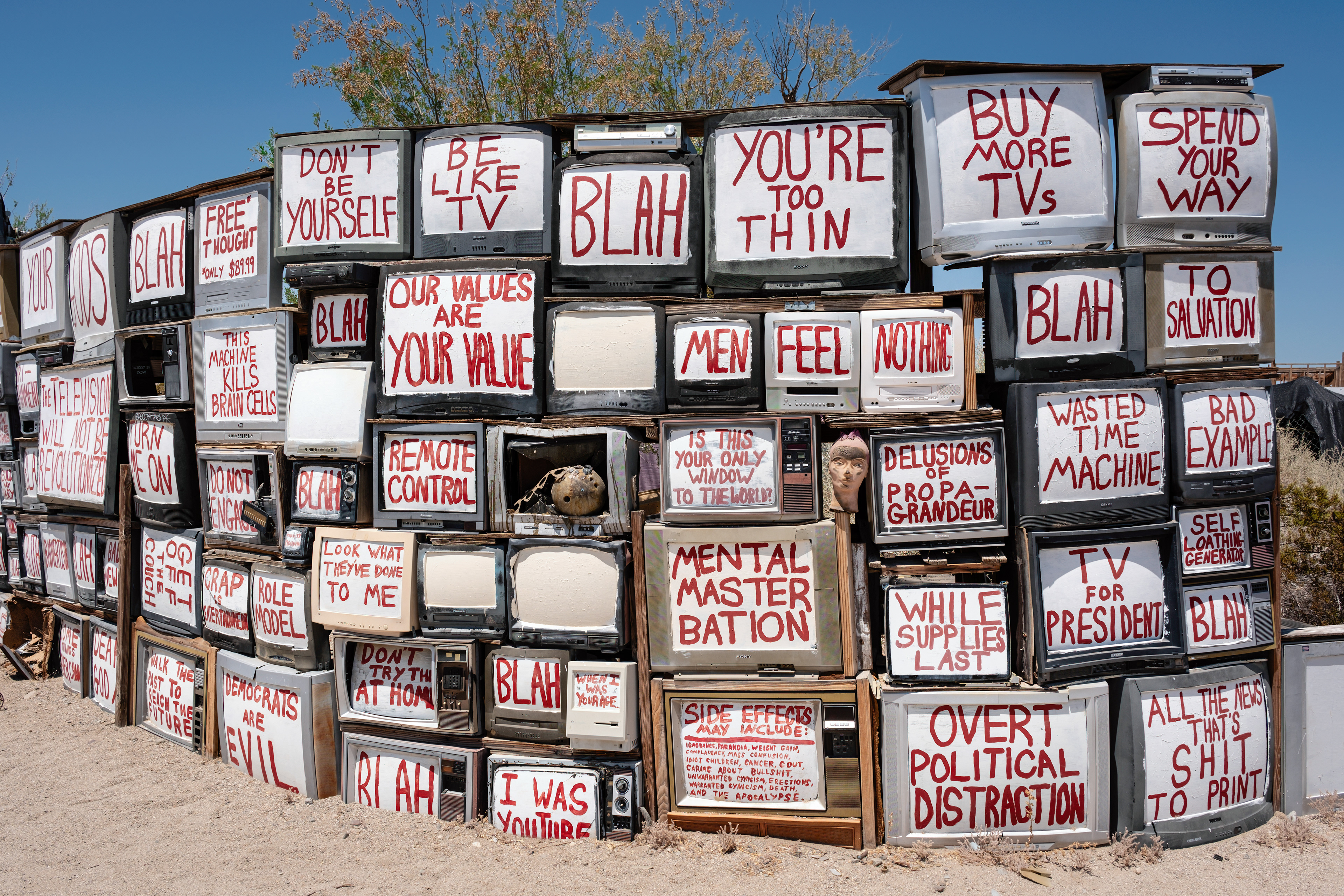
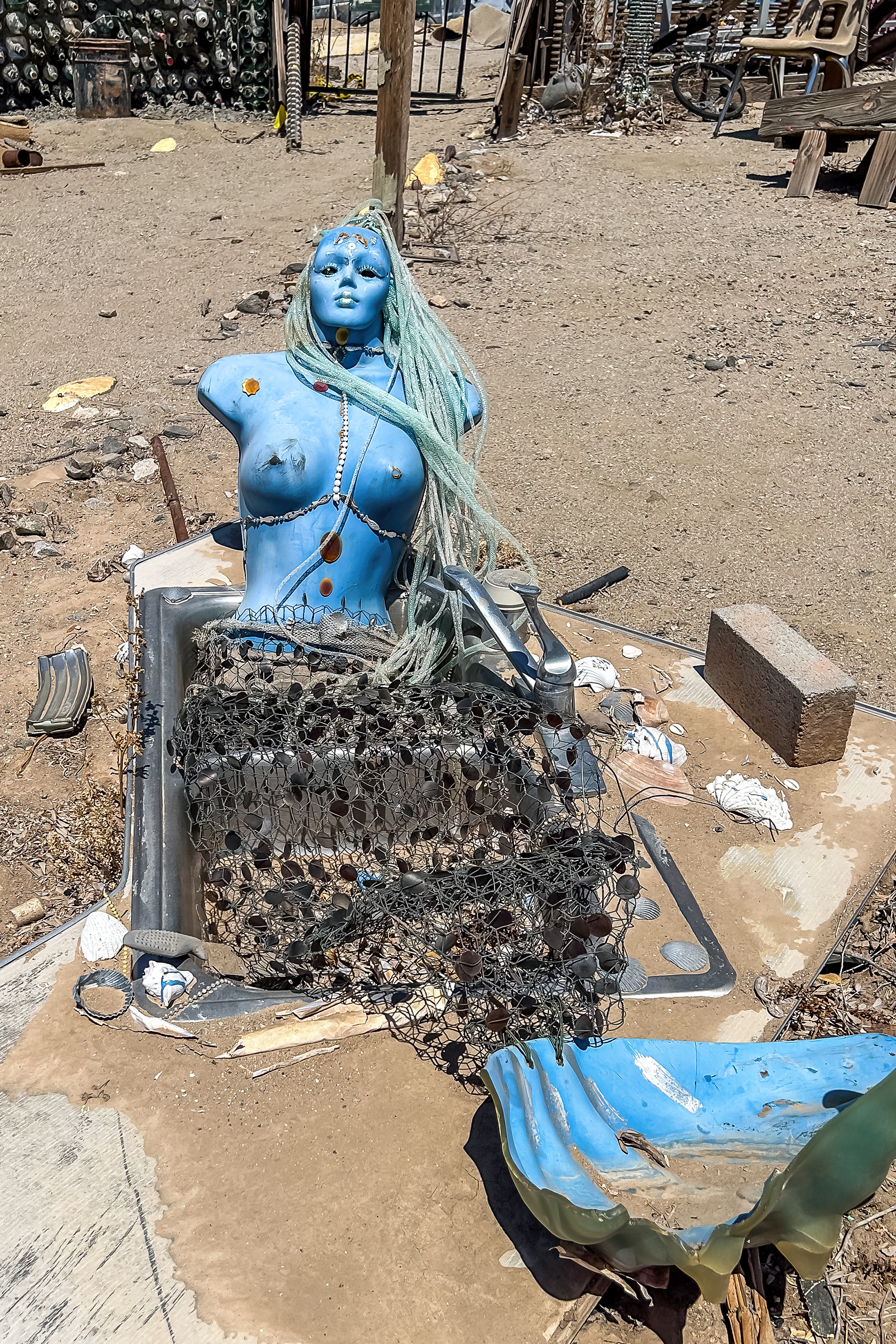
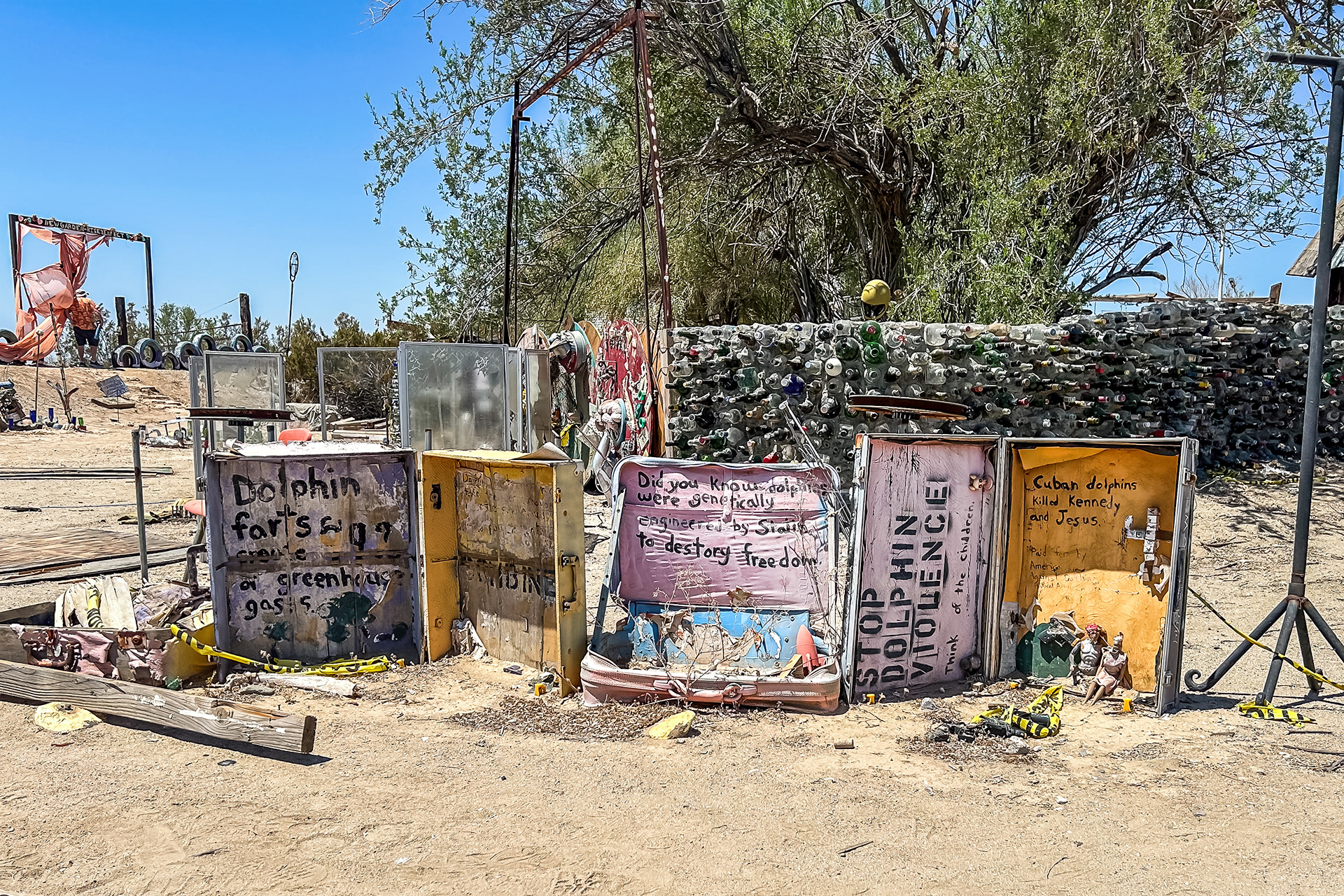
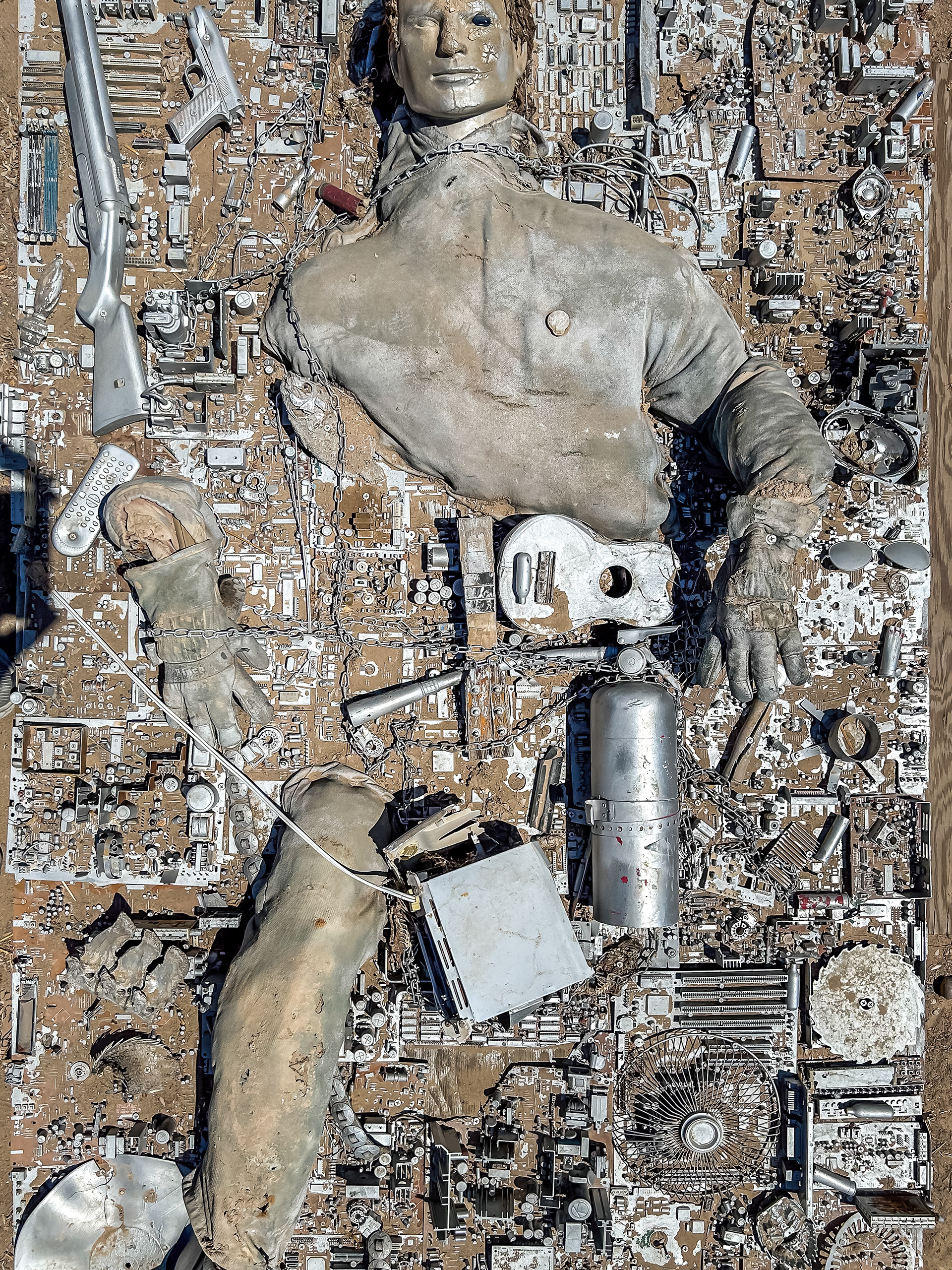
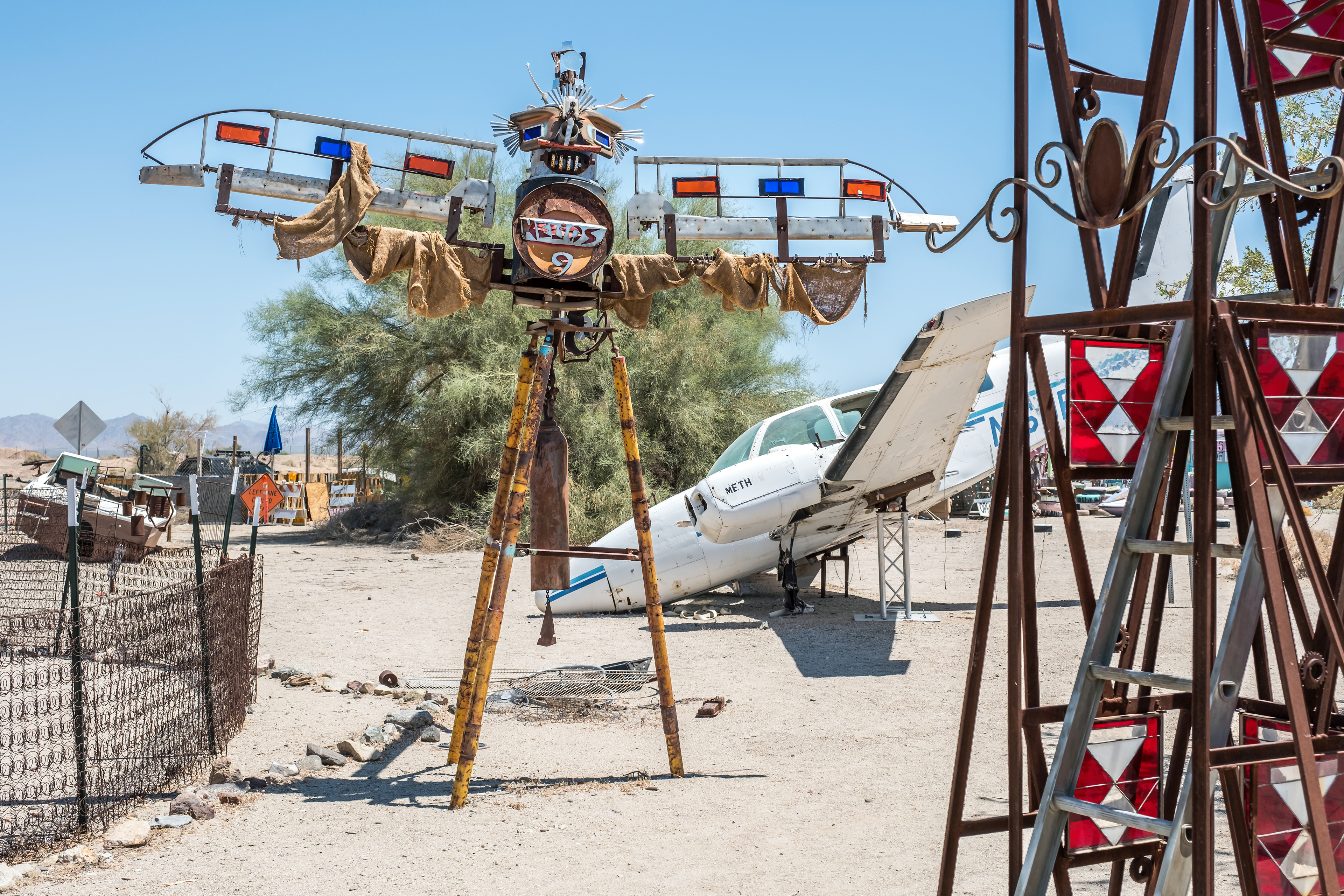
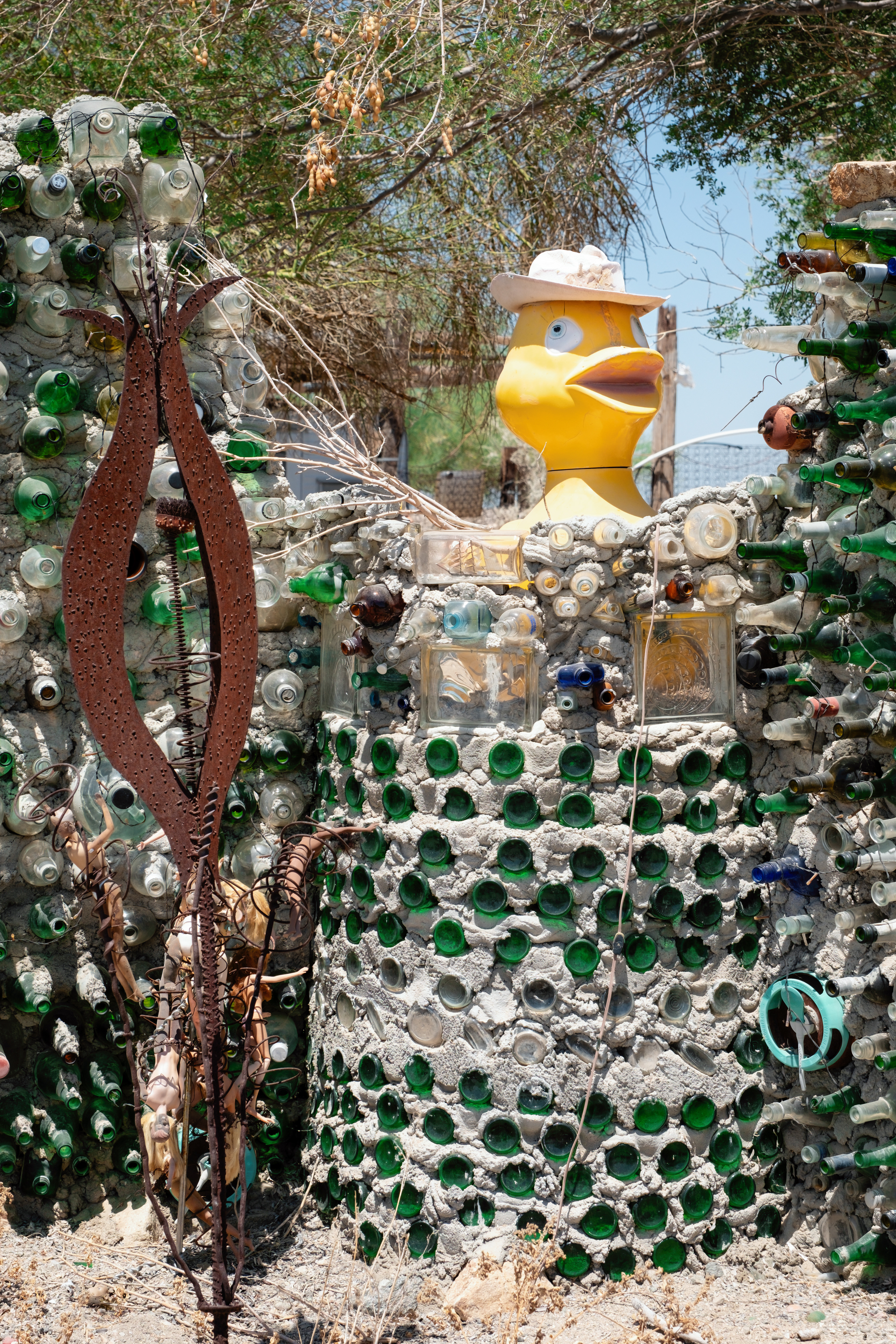
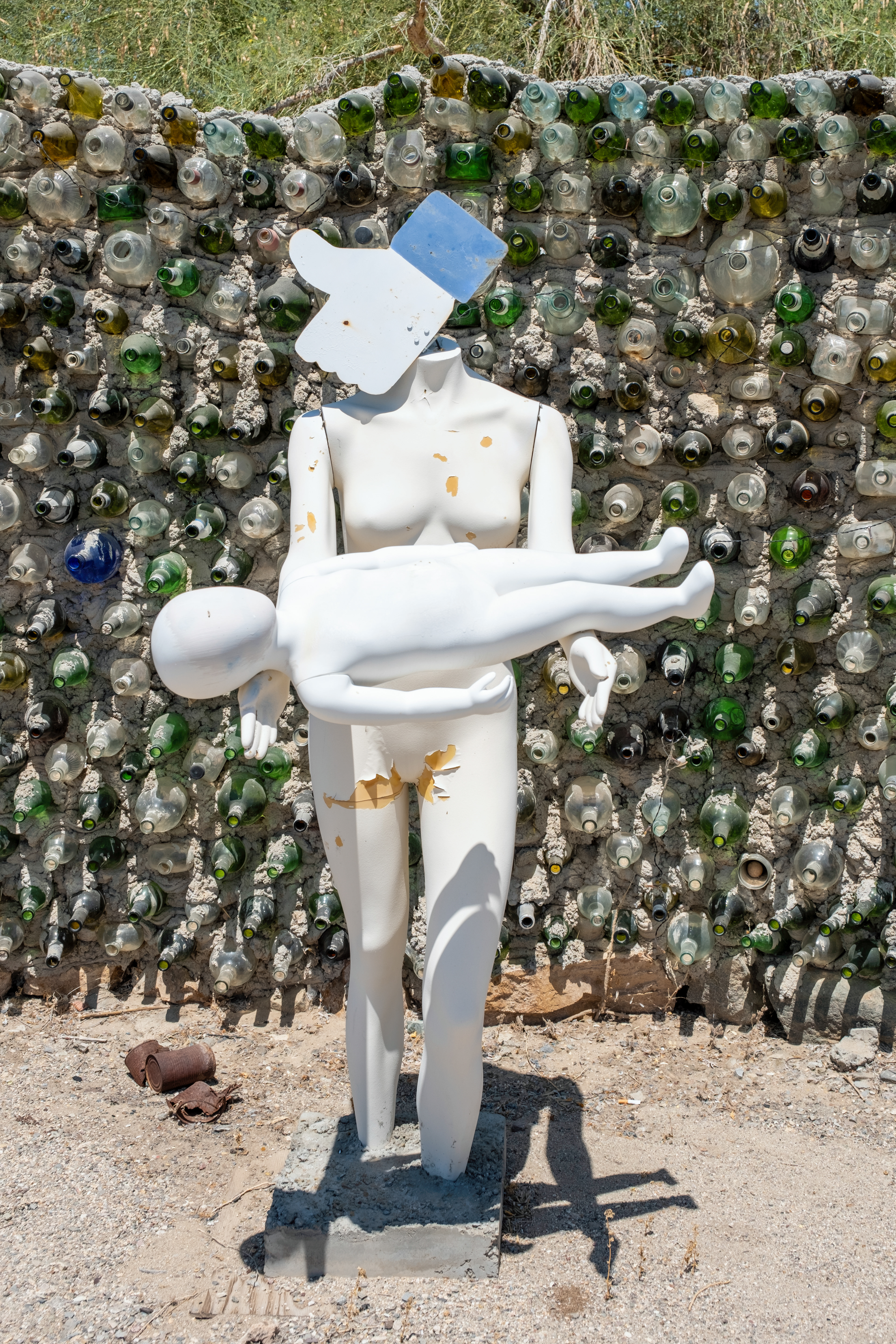
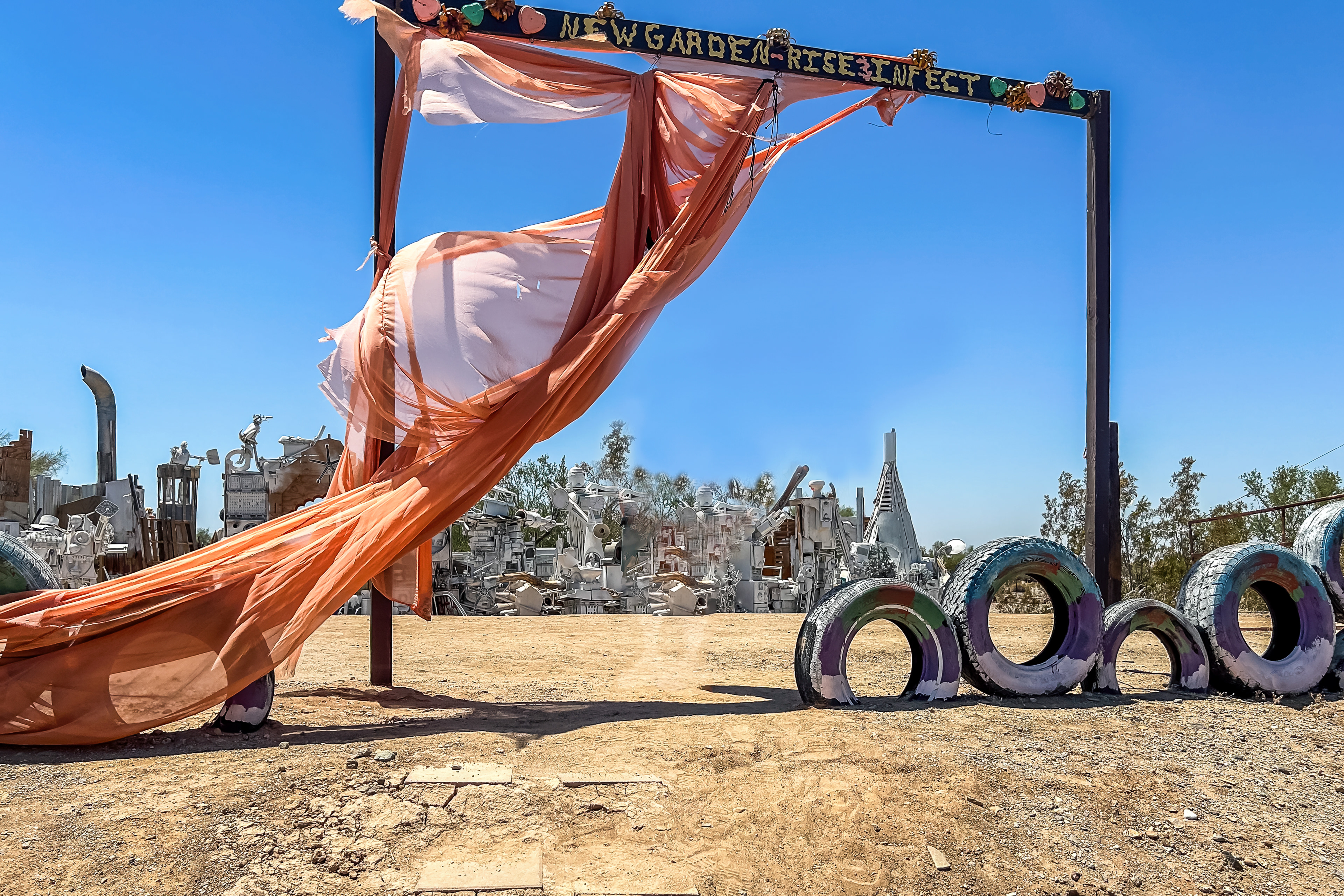
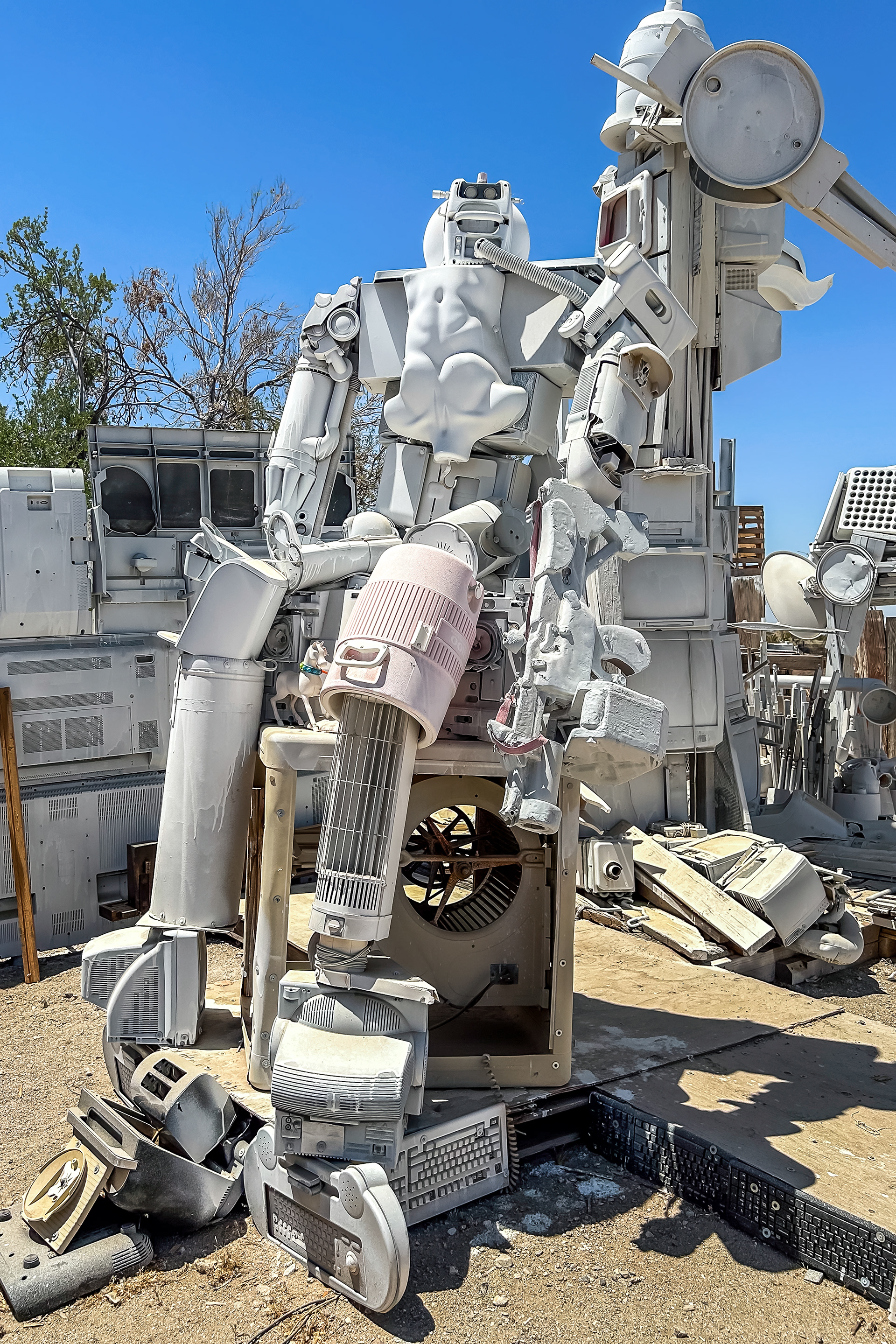
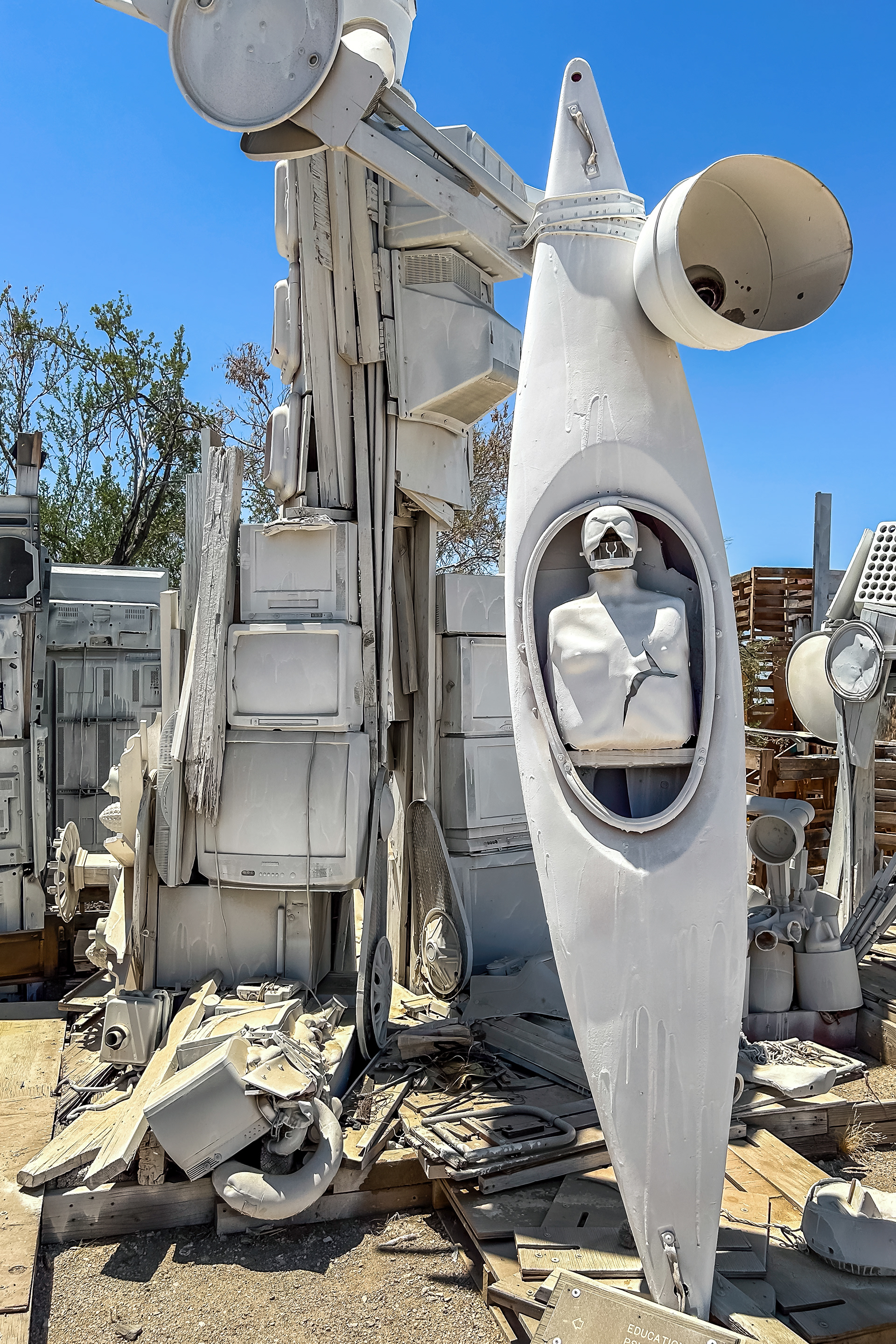
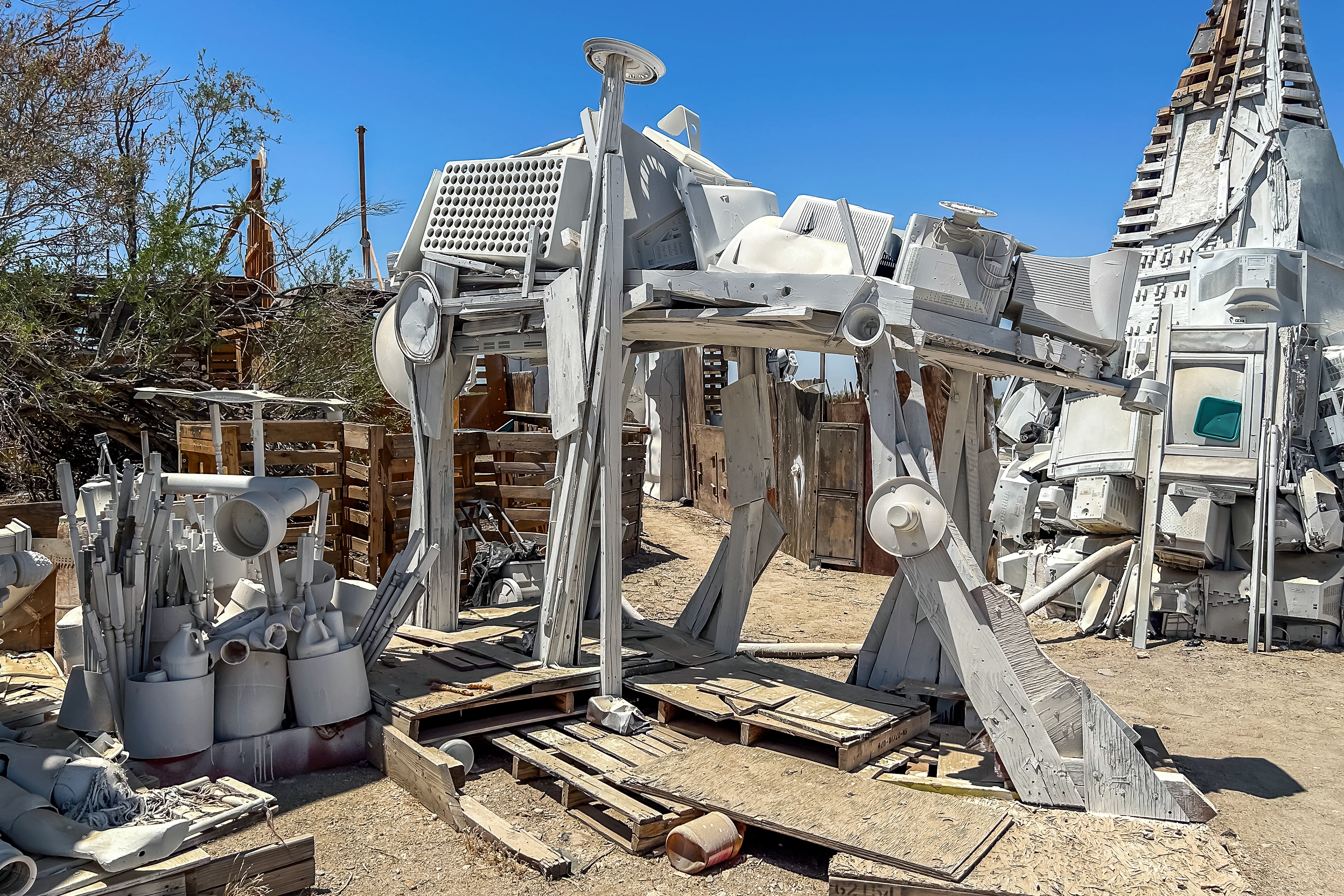
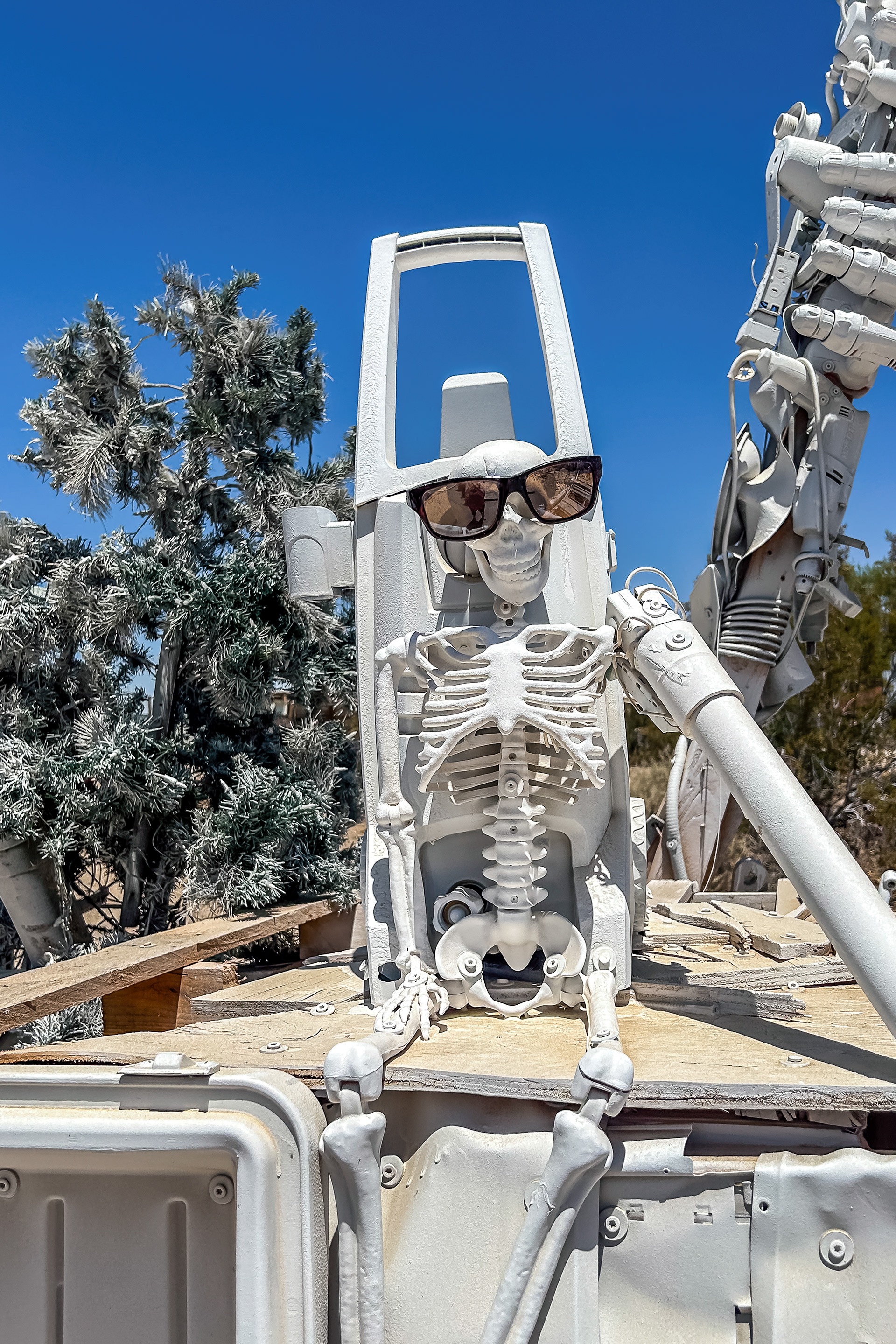
New Garden Rise & Infect
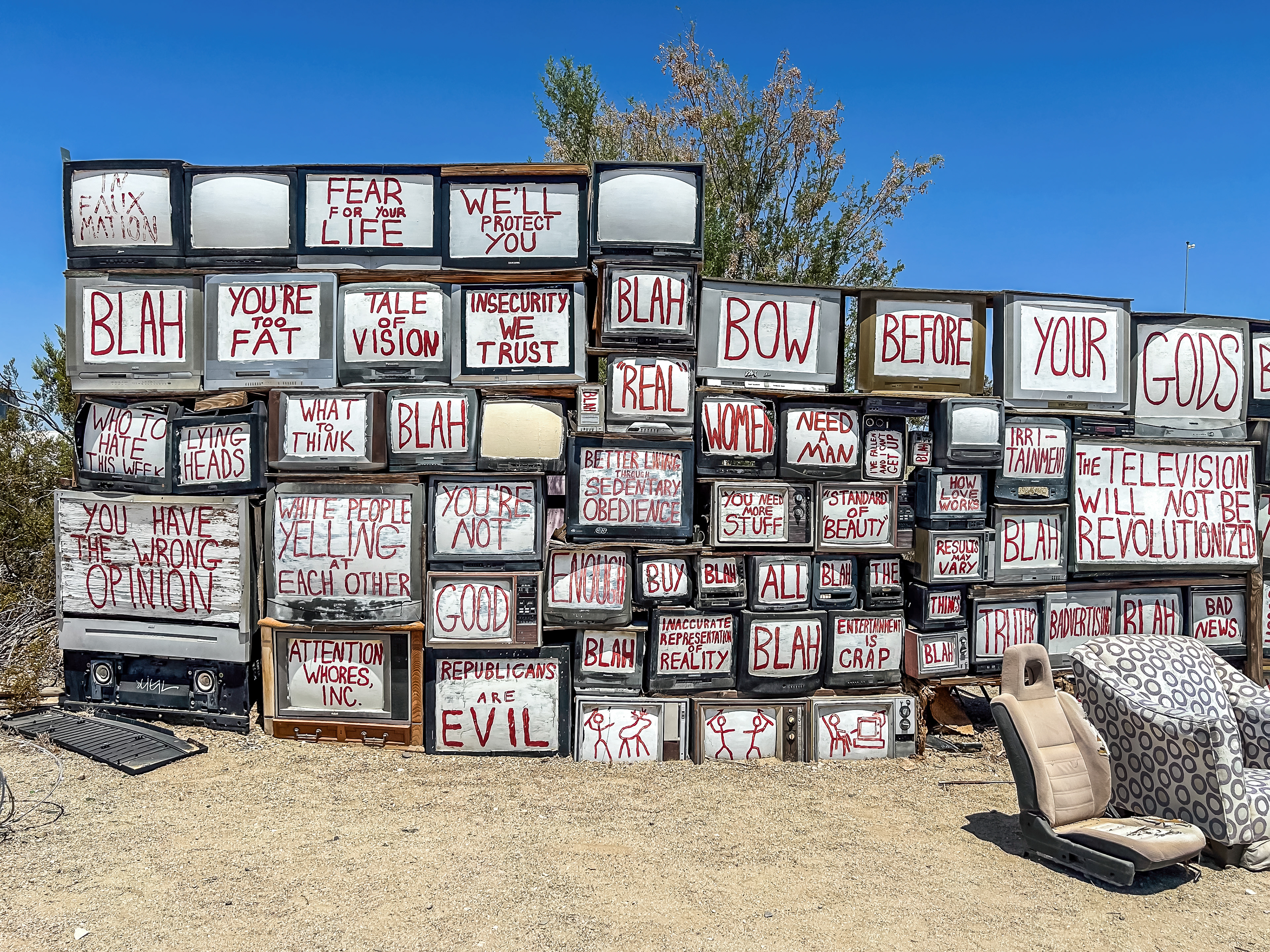
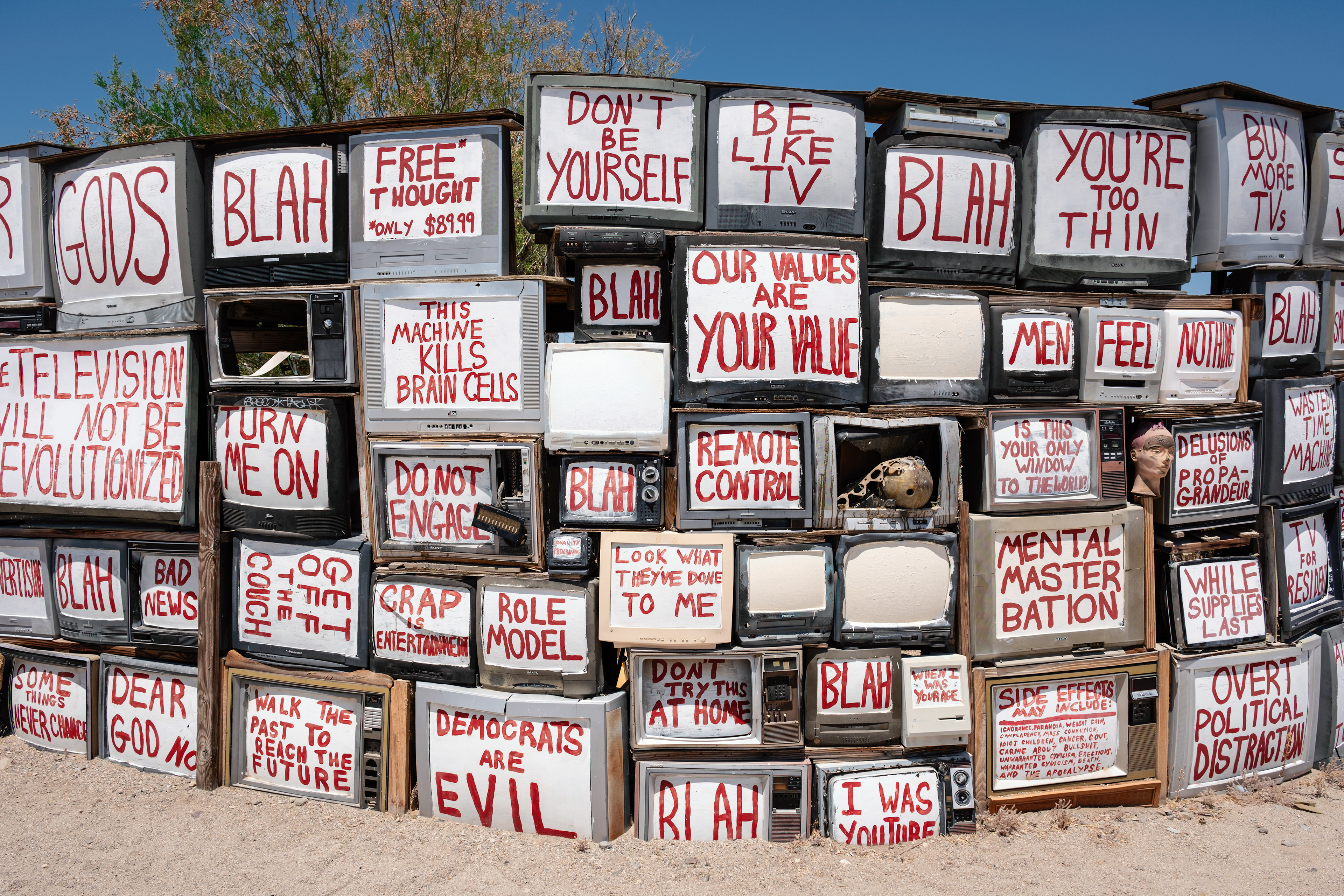
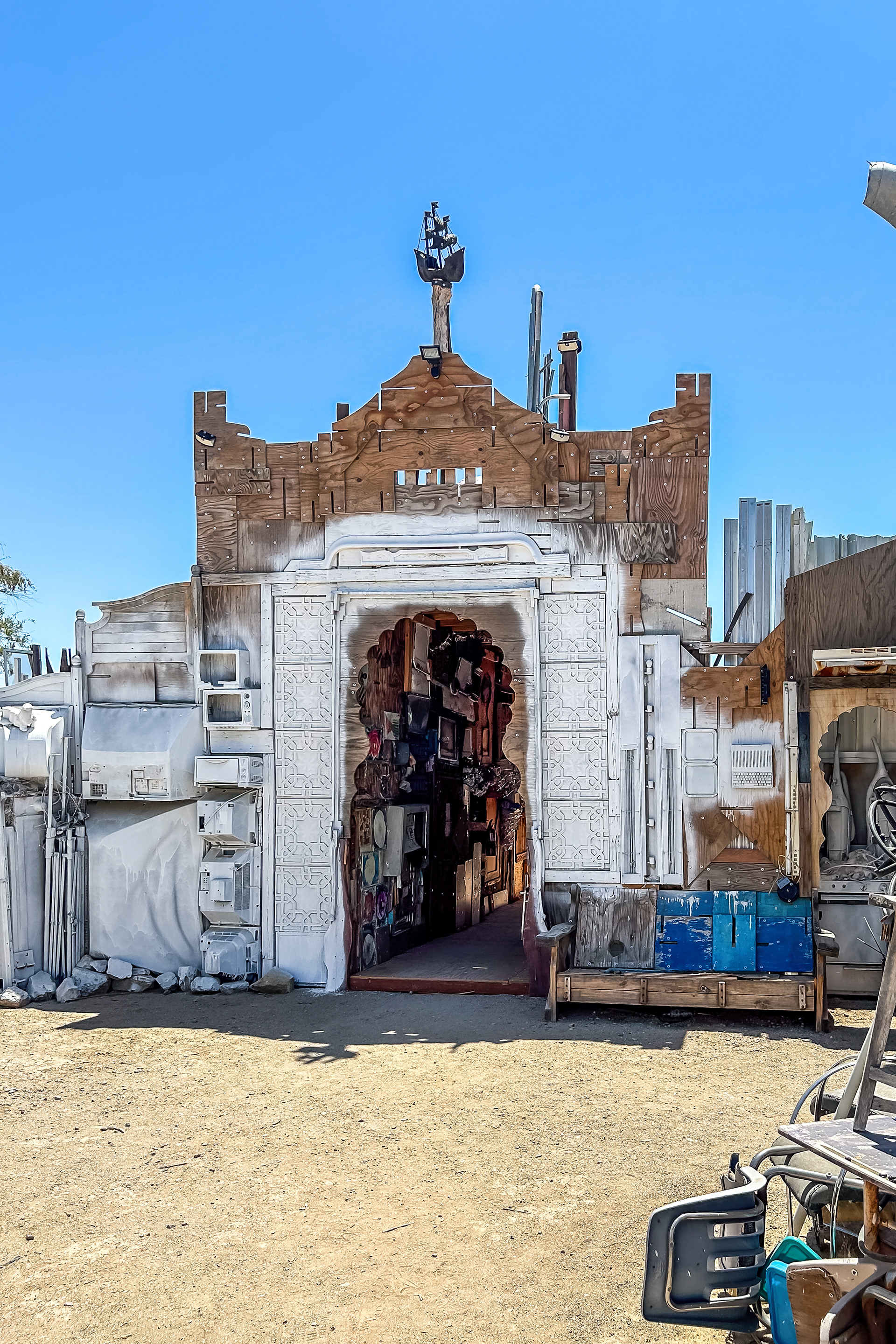
Everything was in the process of being spray painted white.
I can't even imagine how many cans were used.
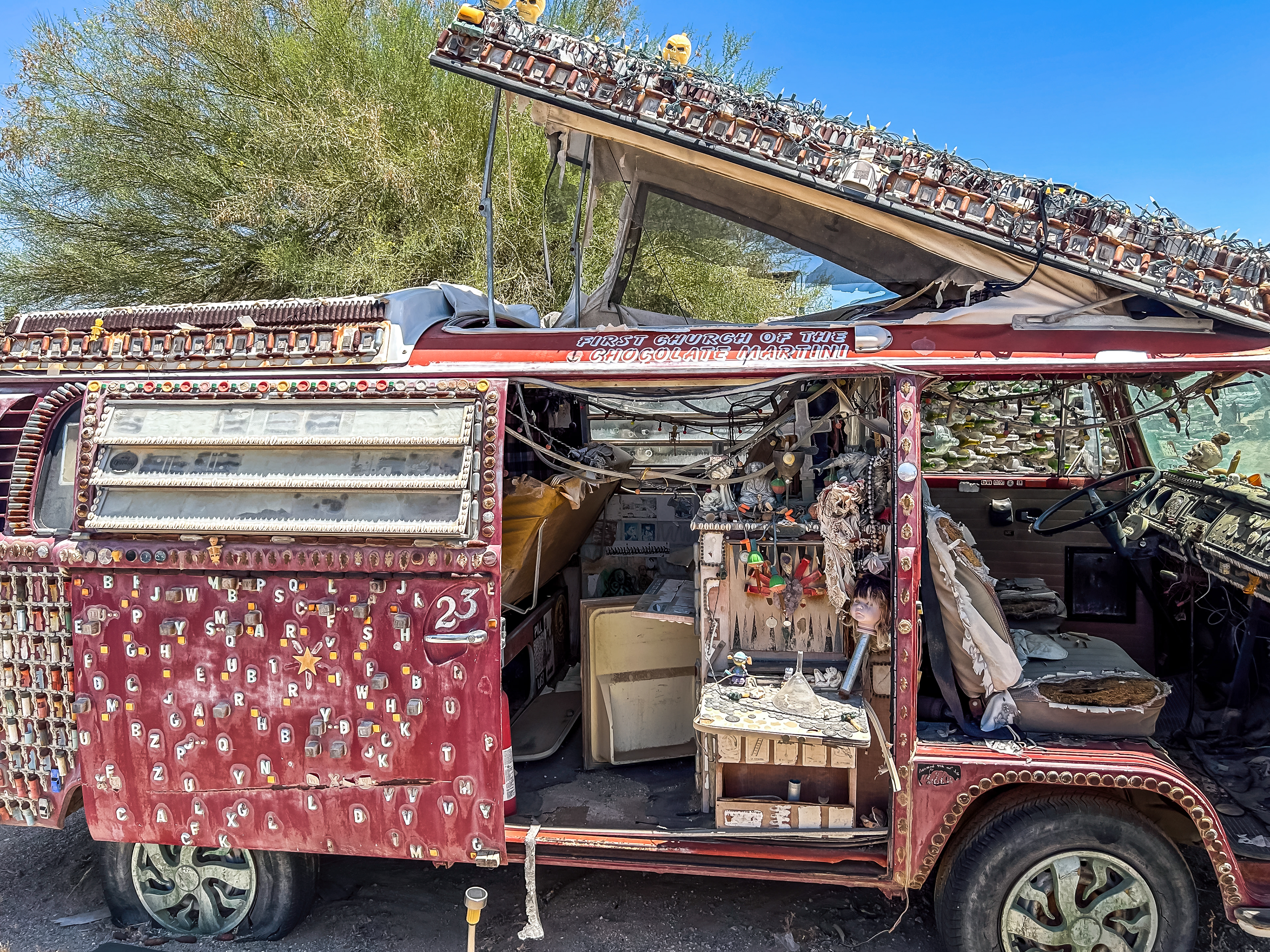
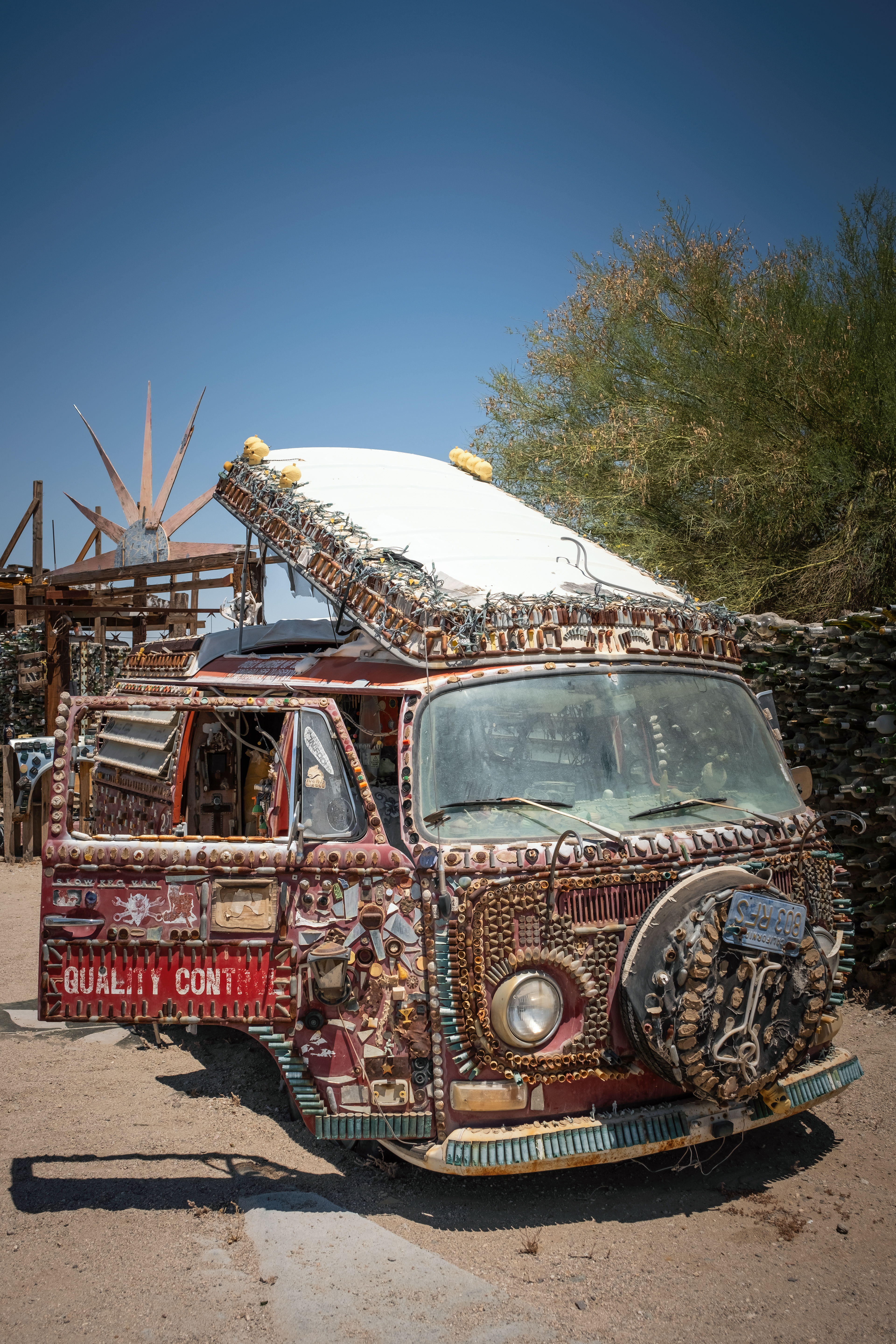
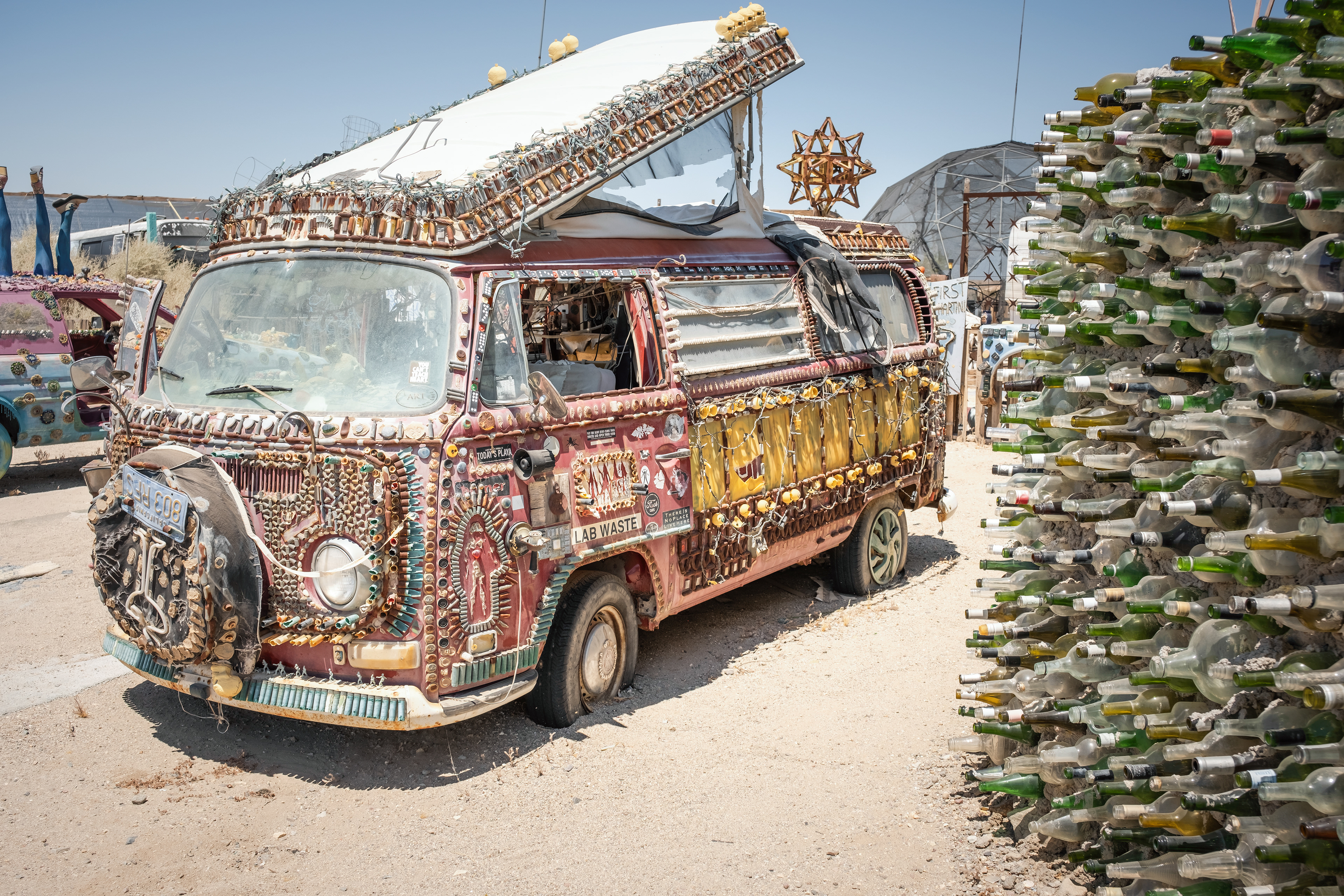
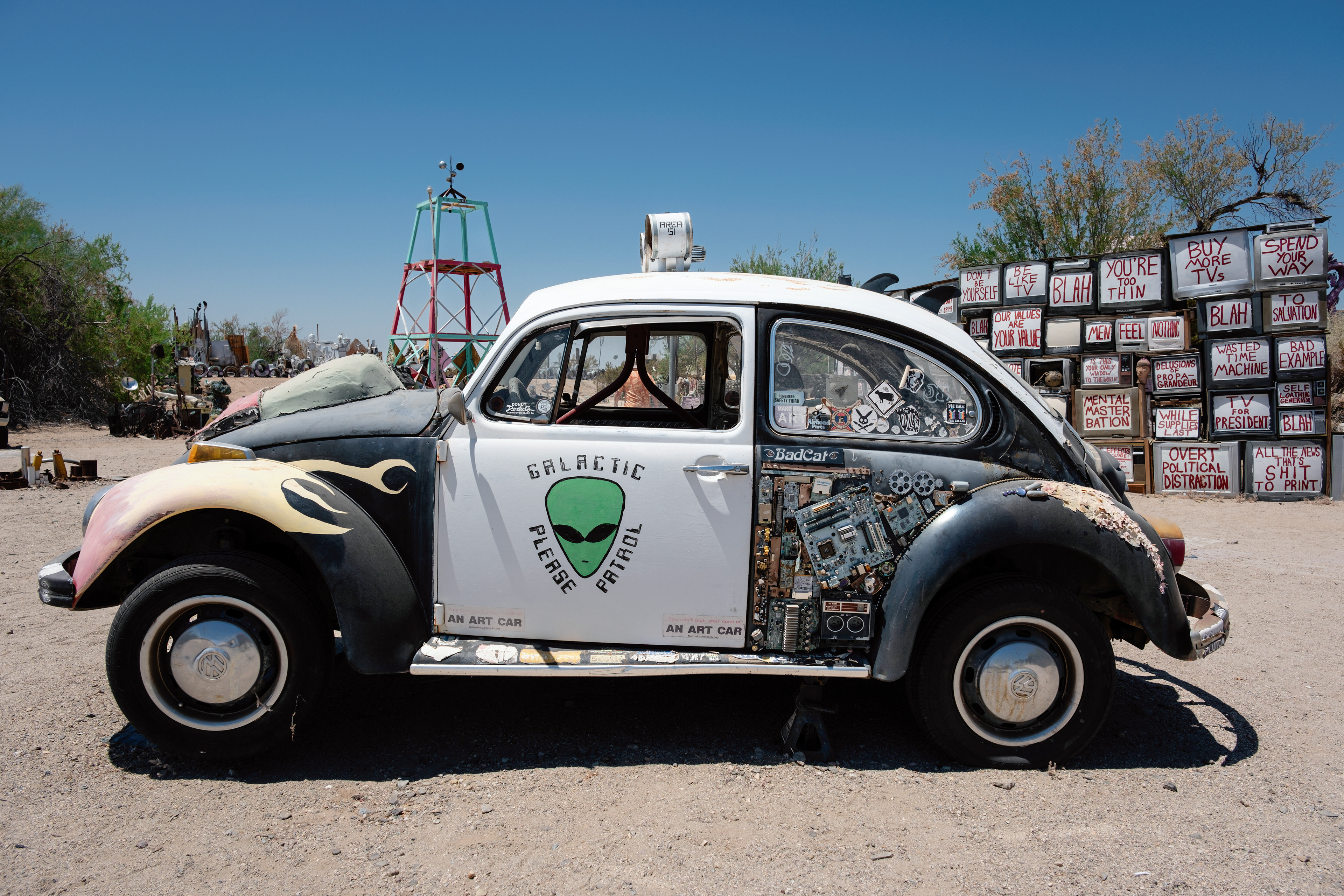
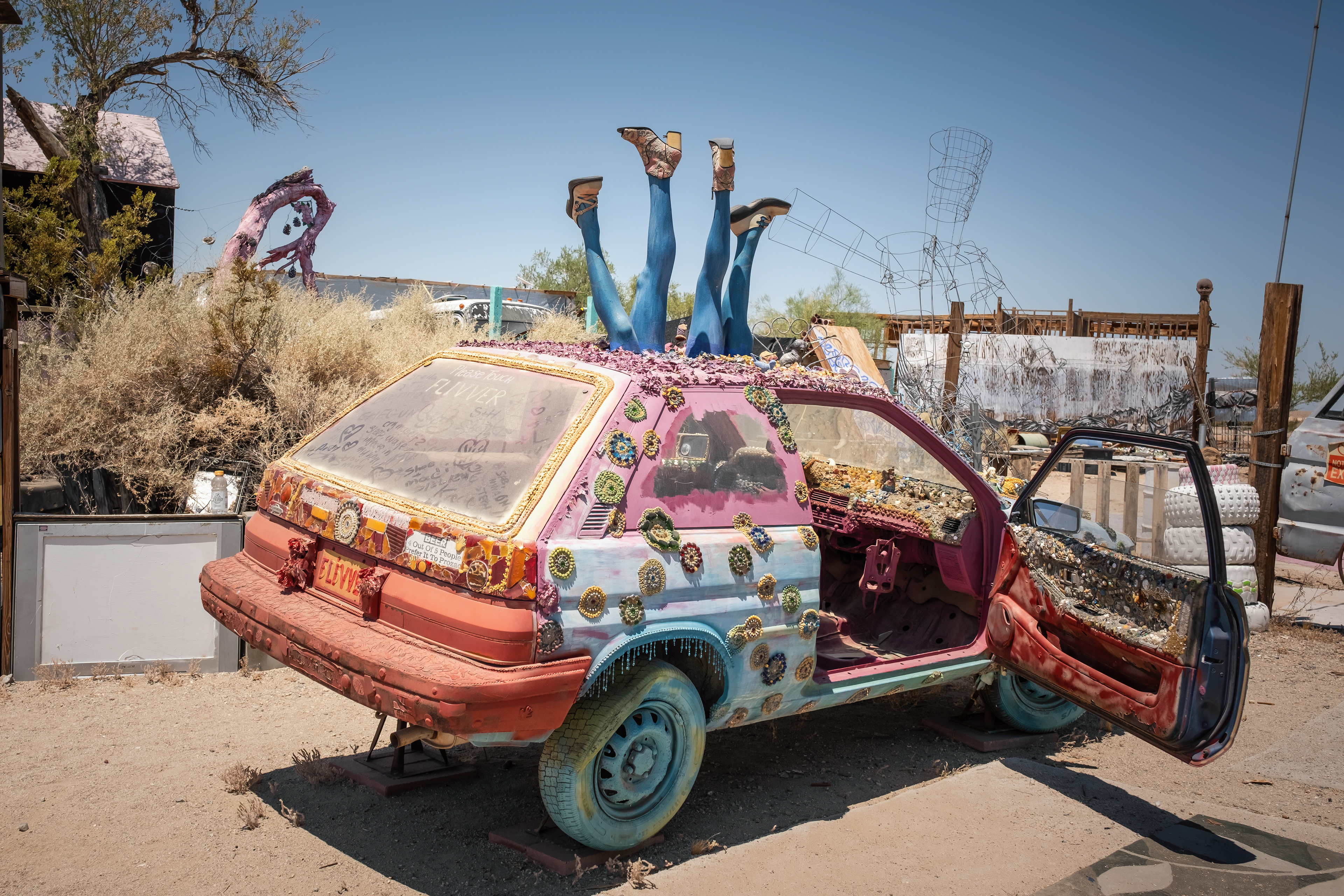
Cars with a Story
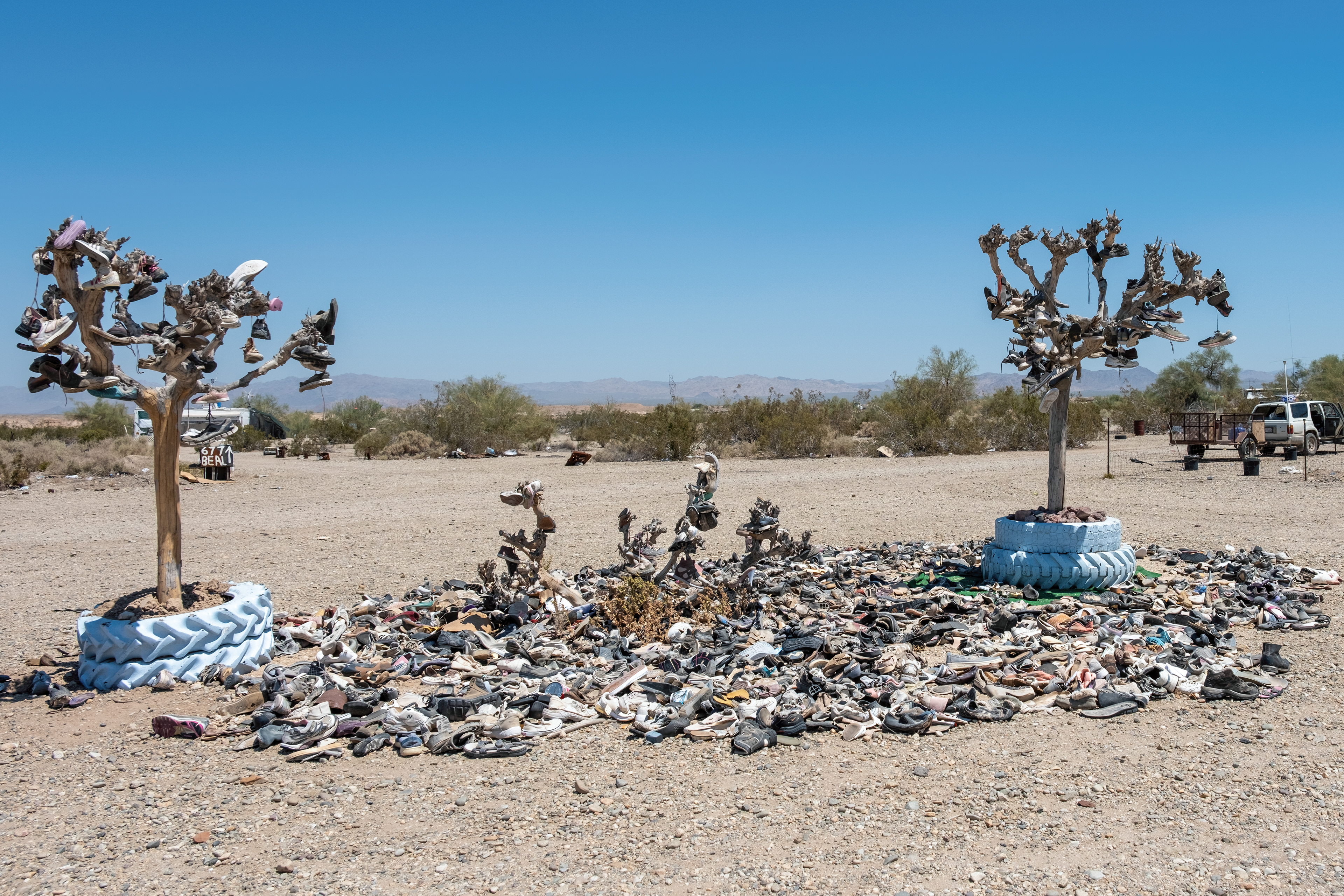
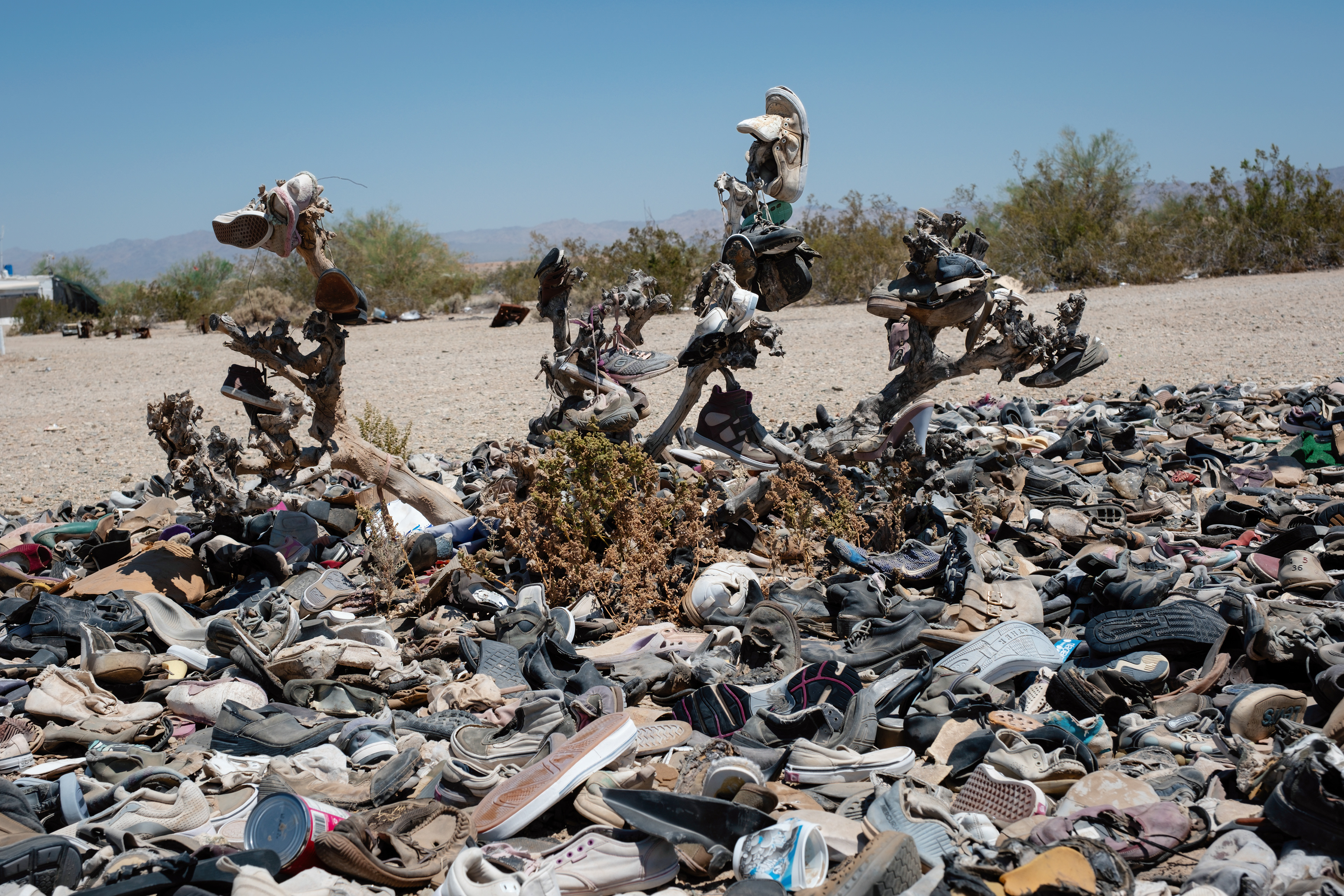
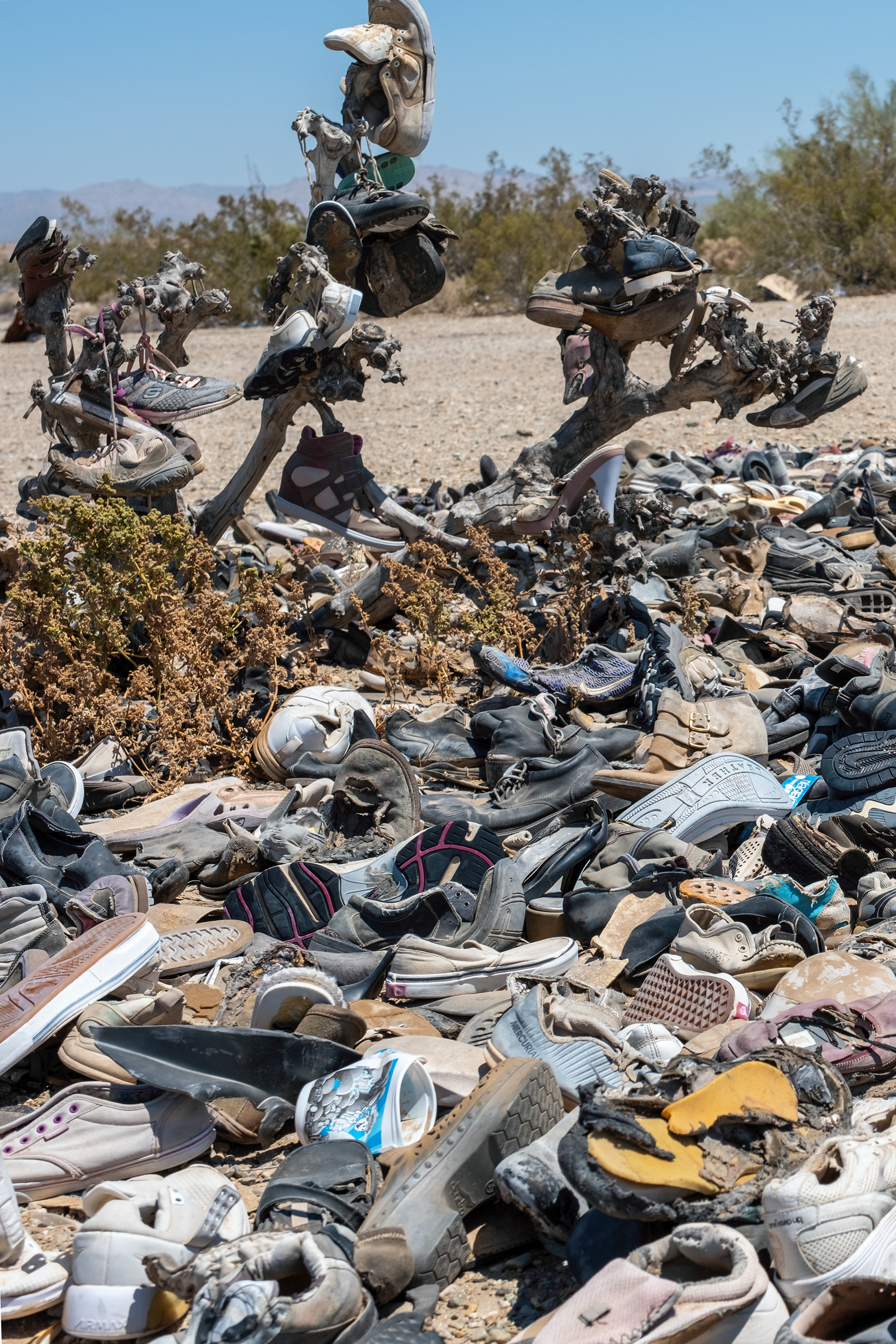
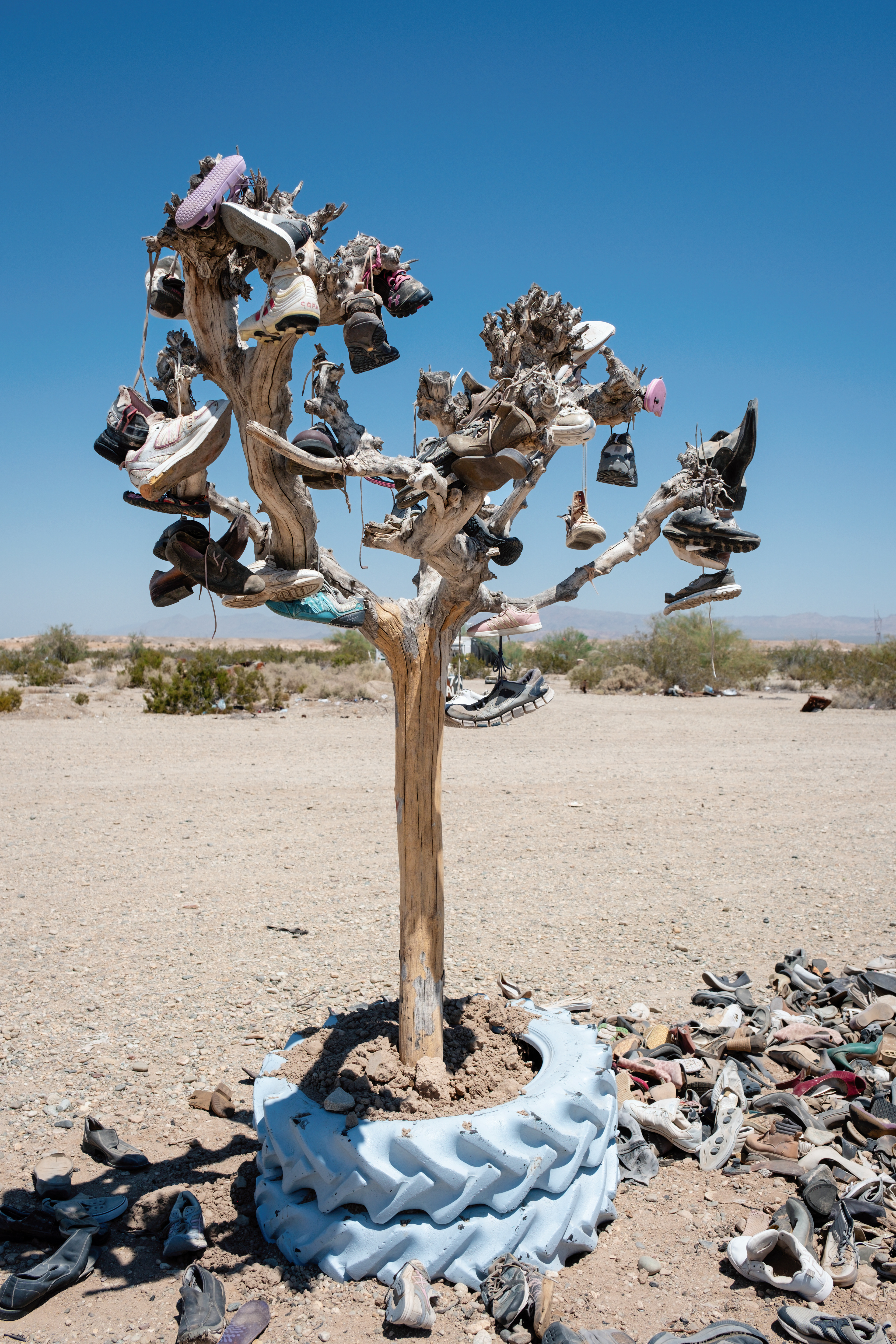
The Shoe Garden
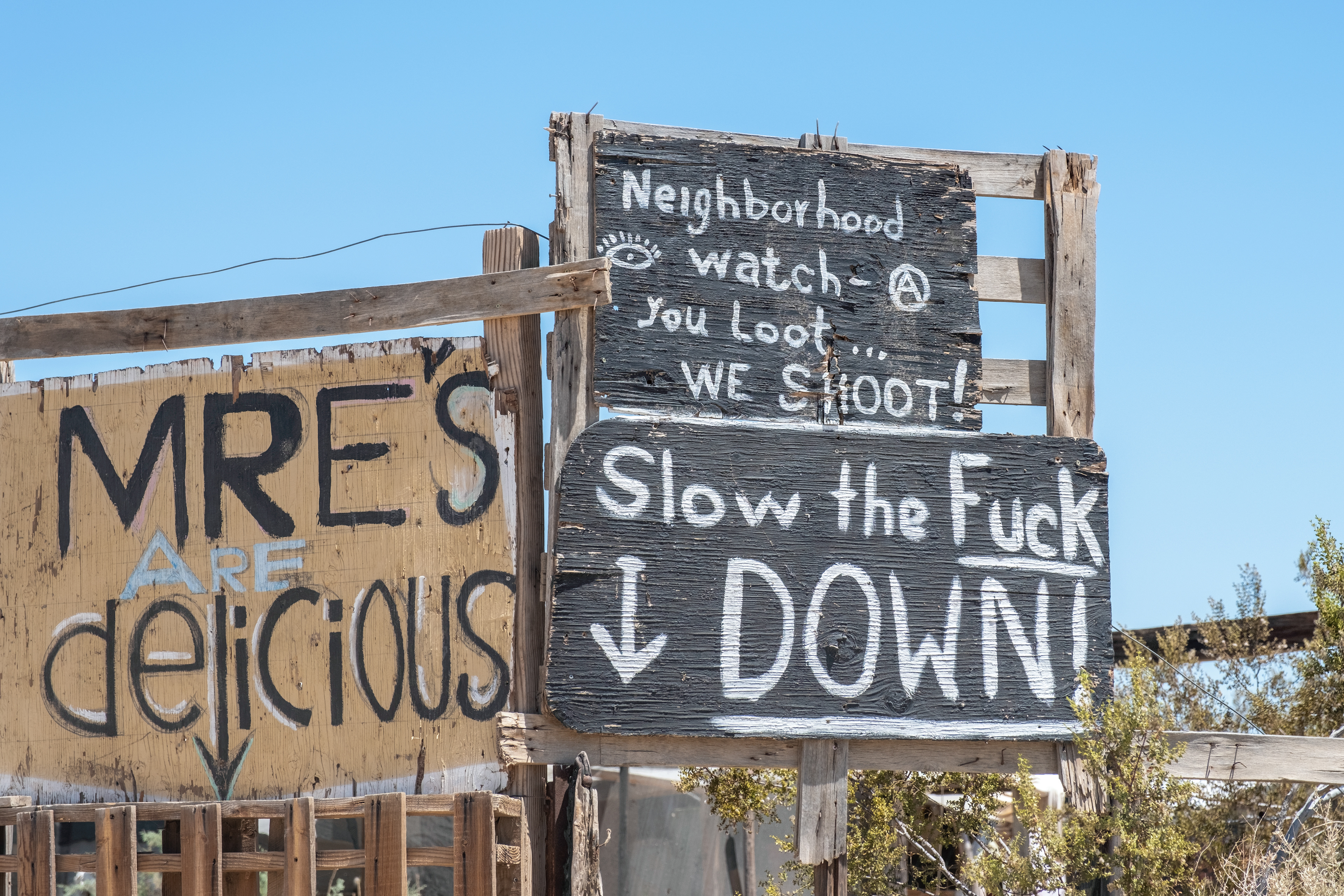
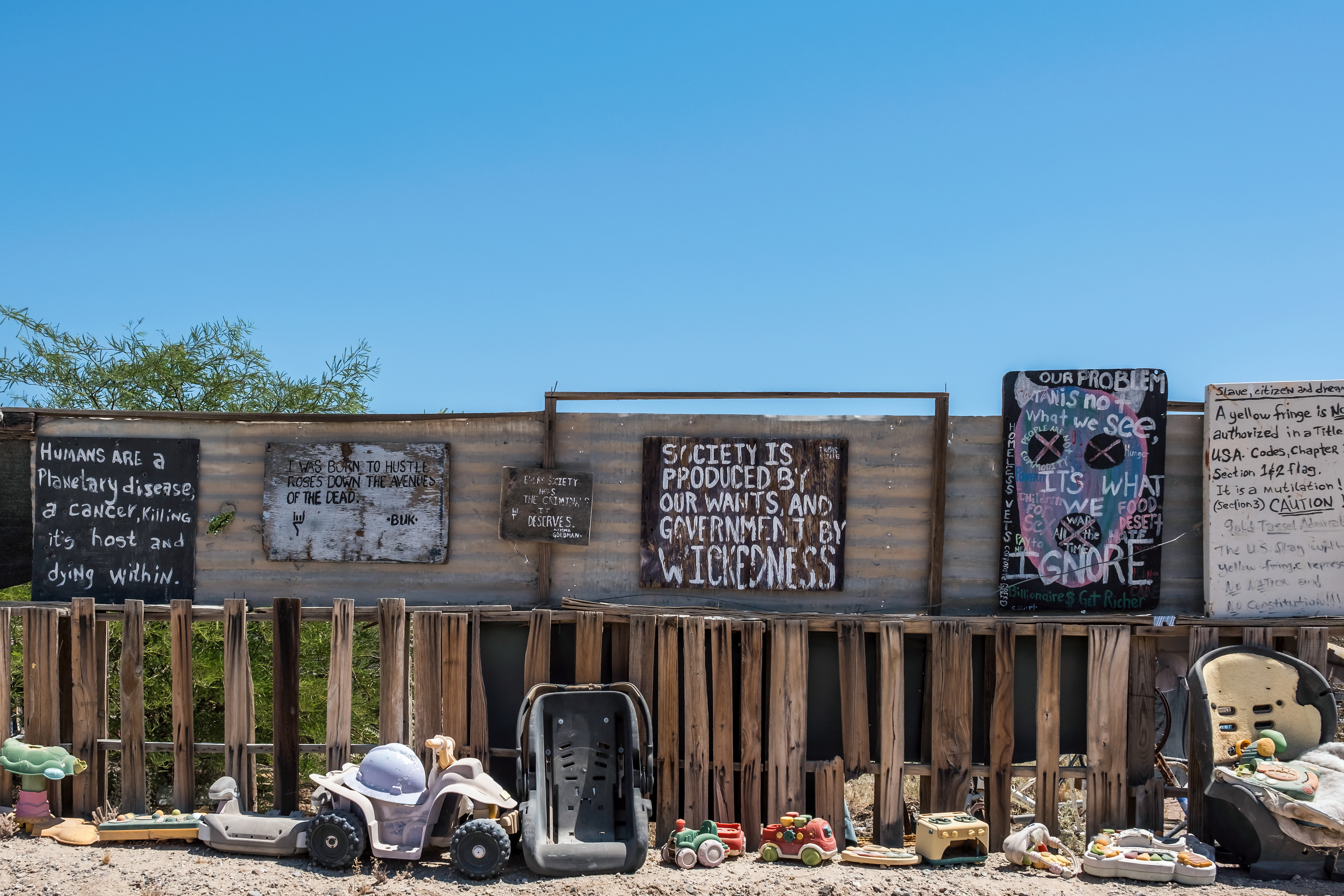
In a world where conventional norms and mainstream expectations dominate, there exists a distinct lack of love for the government, which often seems more concerned with control than compassion.
Outcasts, those who don't fit neatly into society's prescribed boxes, find solace and solidarity among each other. They embrace alternative lifestyles, forging unique paths that defy tradition and celebrate individuality. For these rebels and dreamers, life is about freedom, authenticity, and the pursuit of a world that accepts and cherishes their true selves.
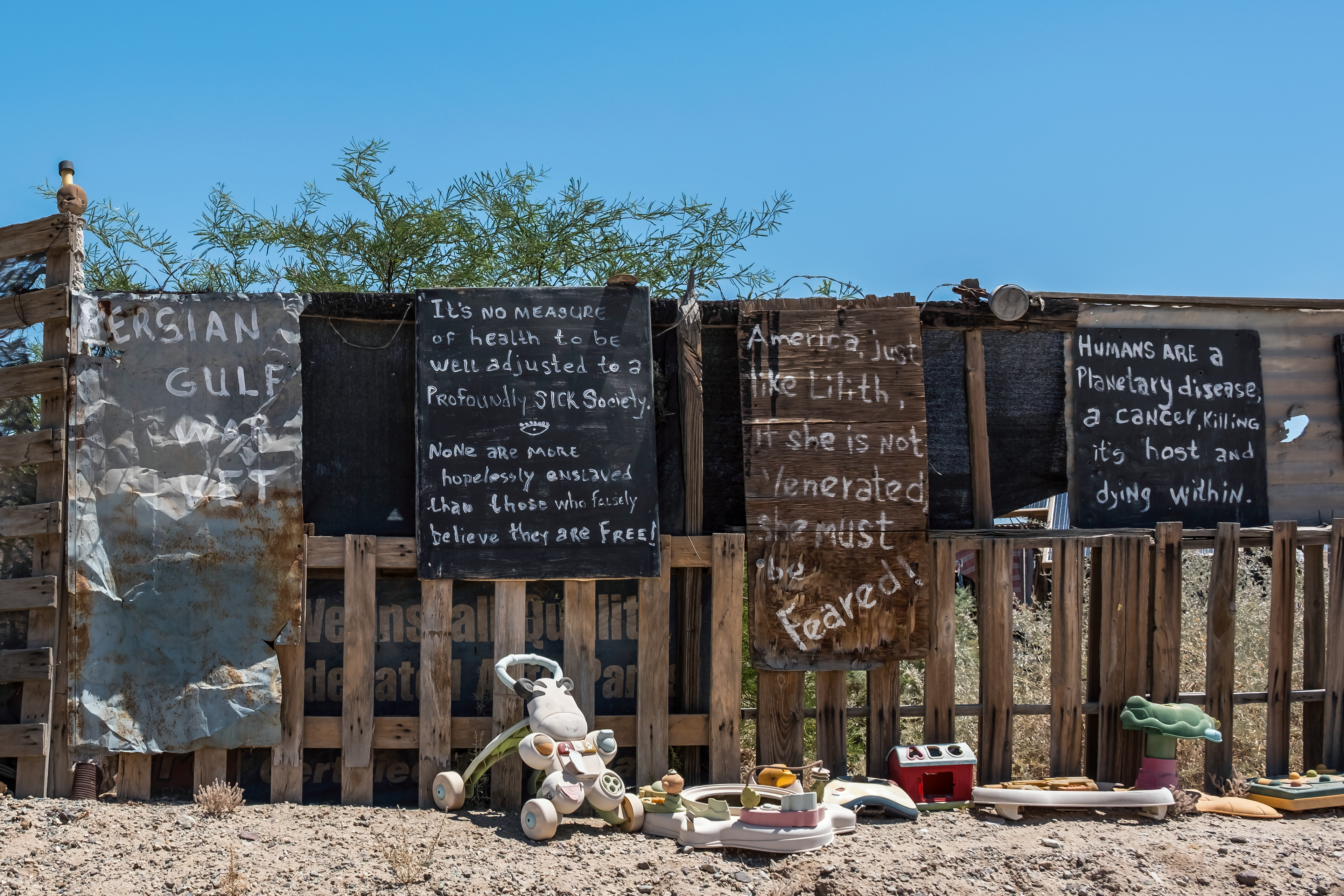
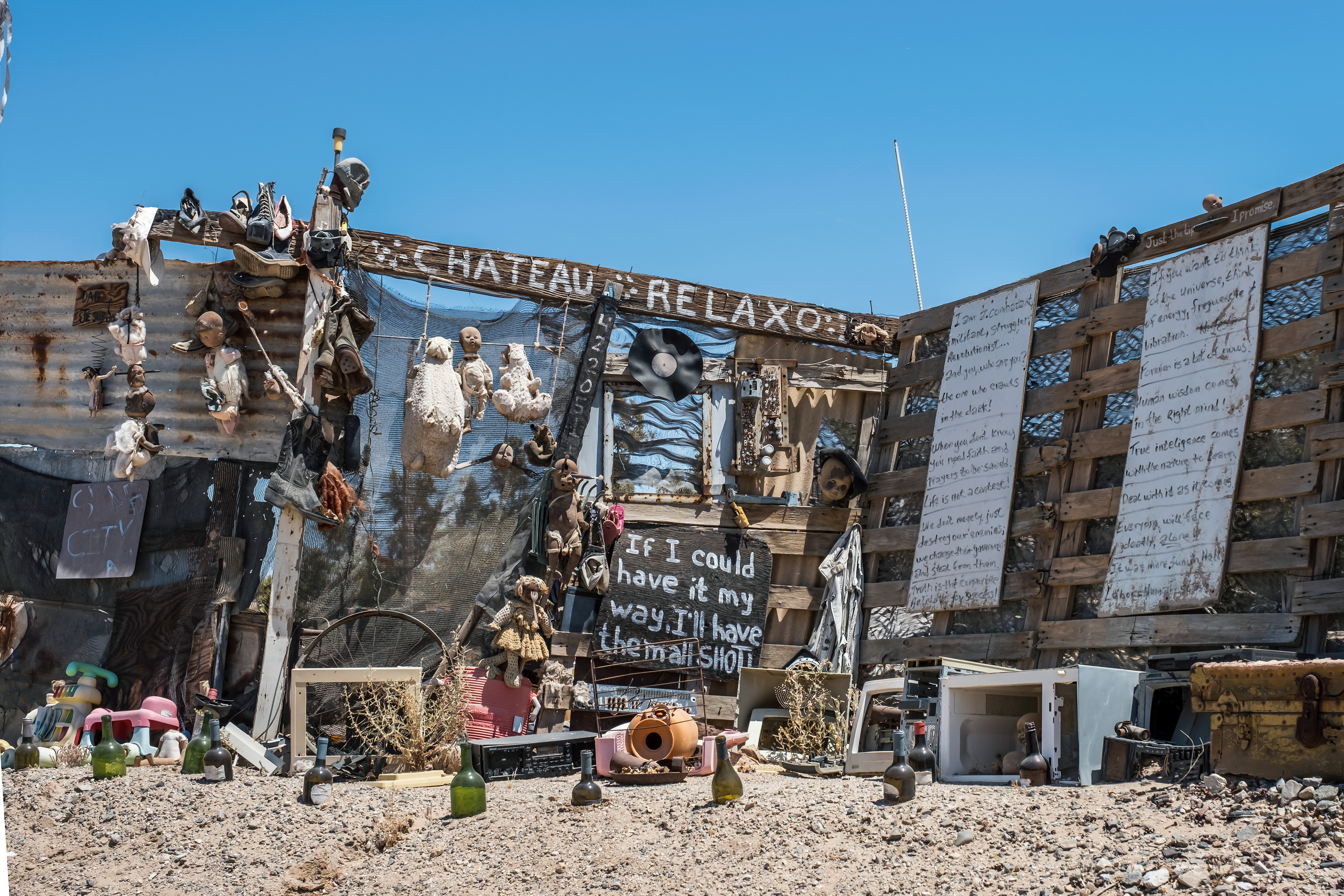
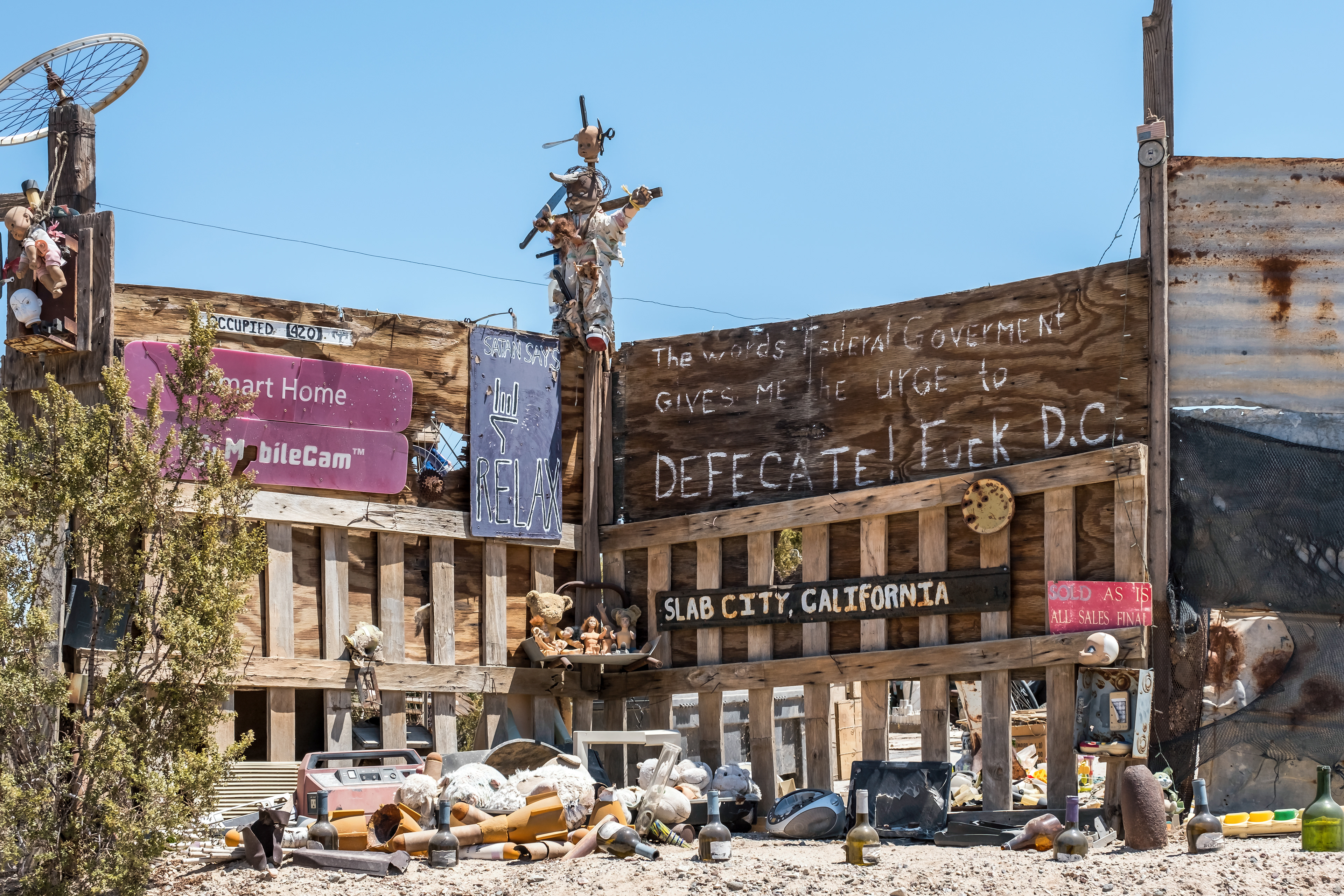
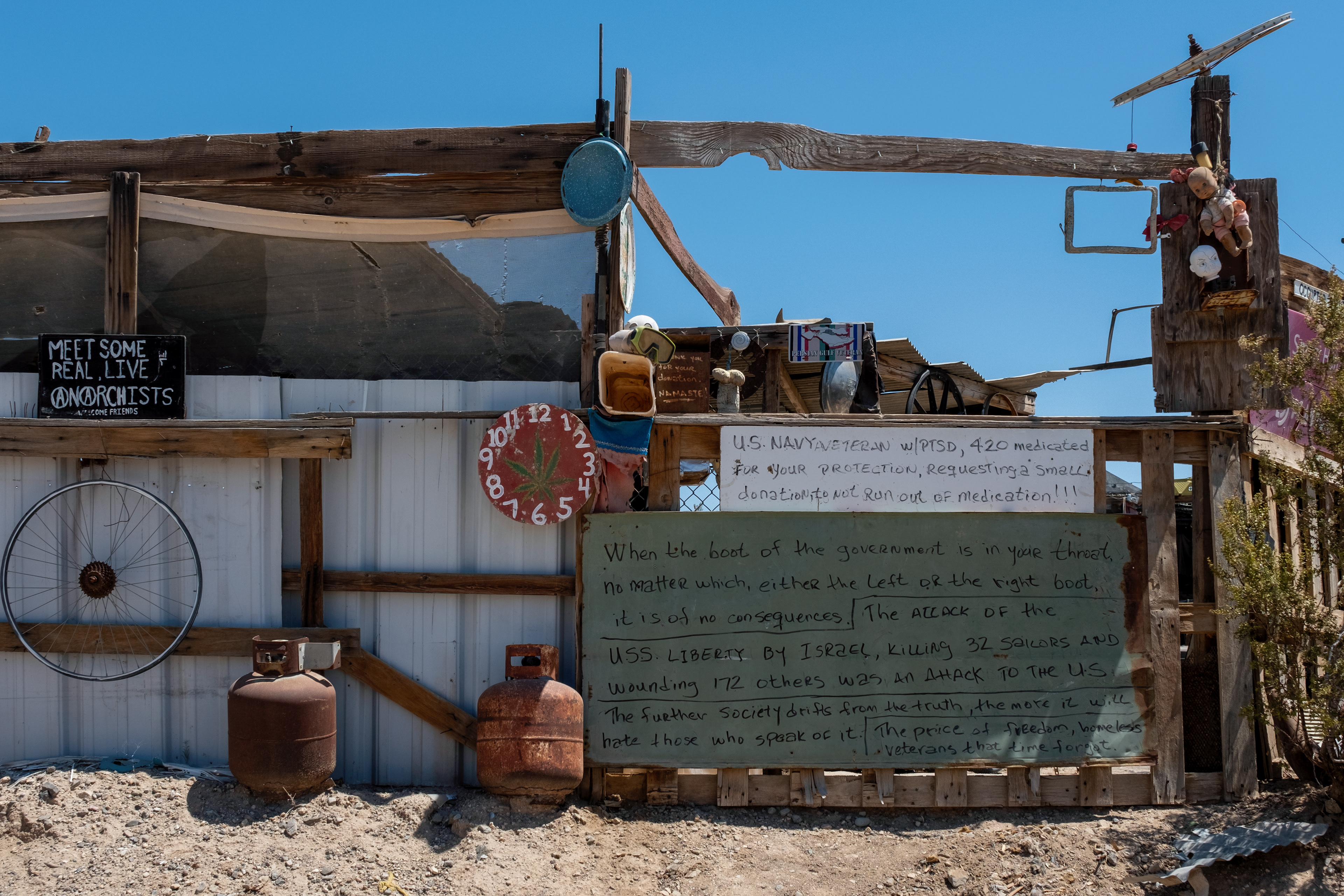
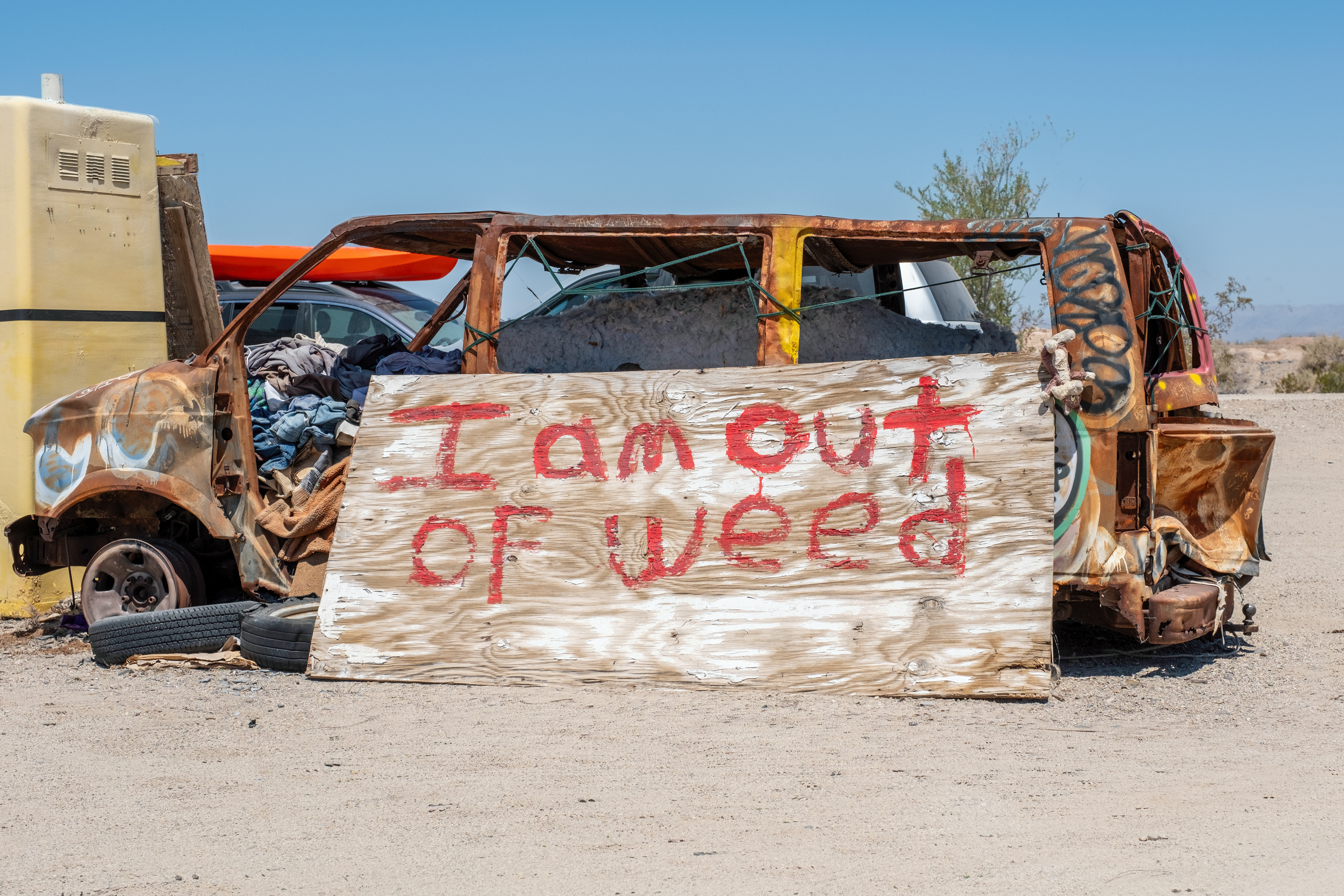
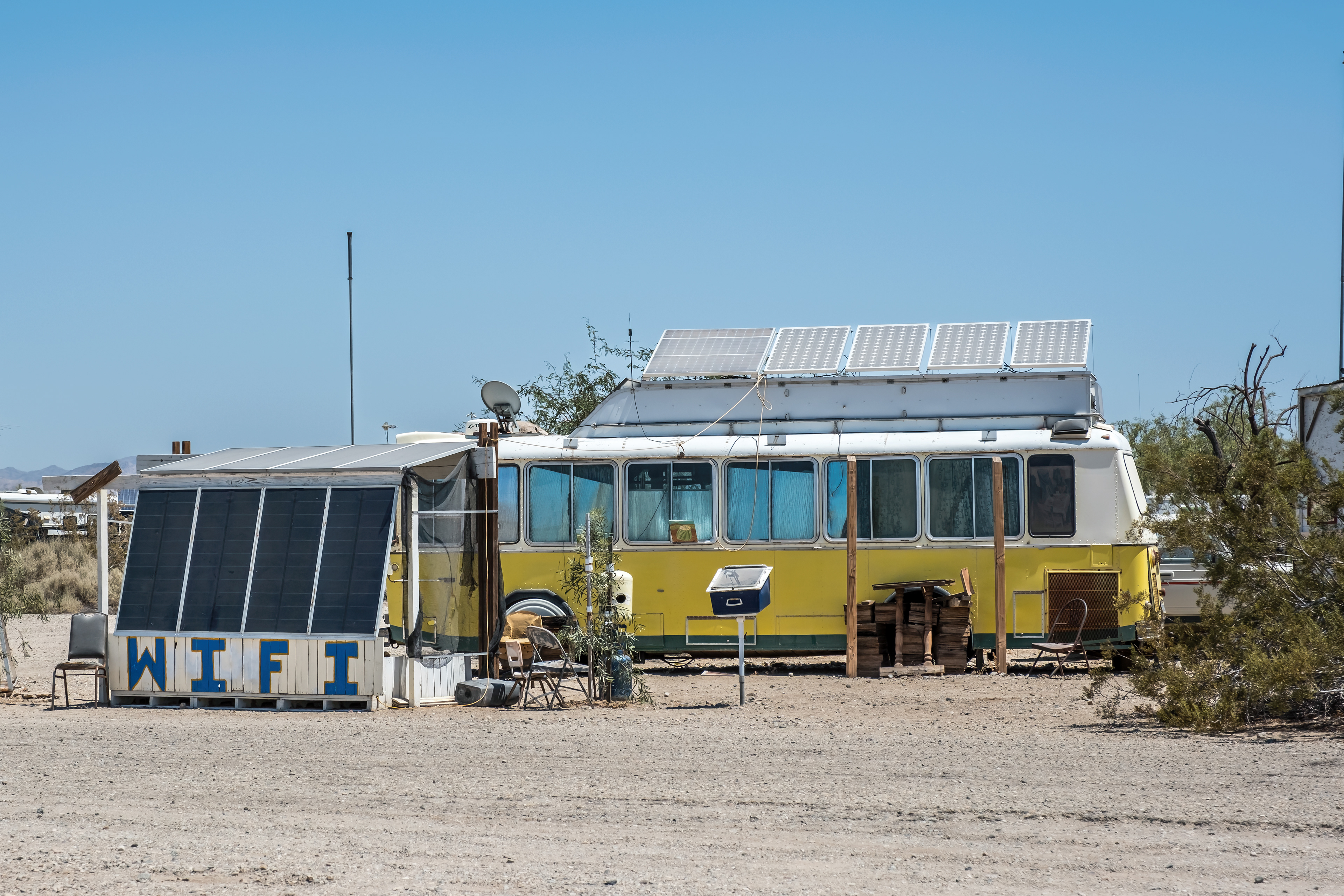
There are no running water, electricity, or sewage systems. Instead, residents harvest rainwater, use solar panels for limited electricity, and rely on composting toilets and waste recycling.
Despite these challenges, the community thrives through strong social bonds, bartering, and a shared commitment to sustainable living. The city's resilience and self-sufficiency stand as a testament to human adaptability and cooperative spirit in the face of modern-day necessities.
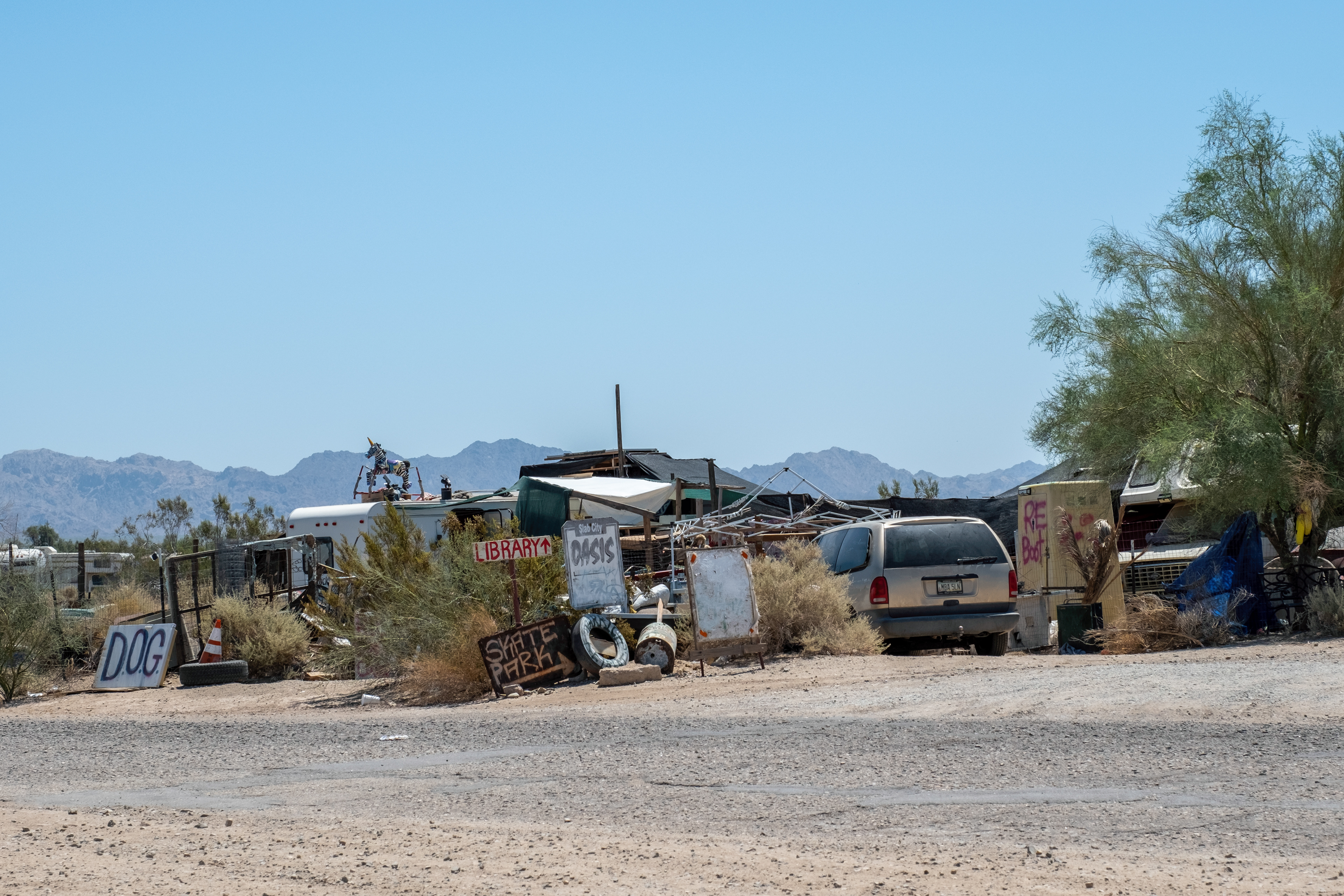
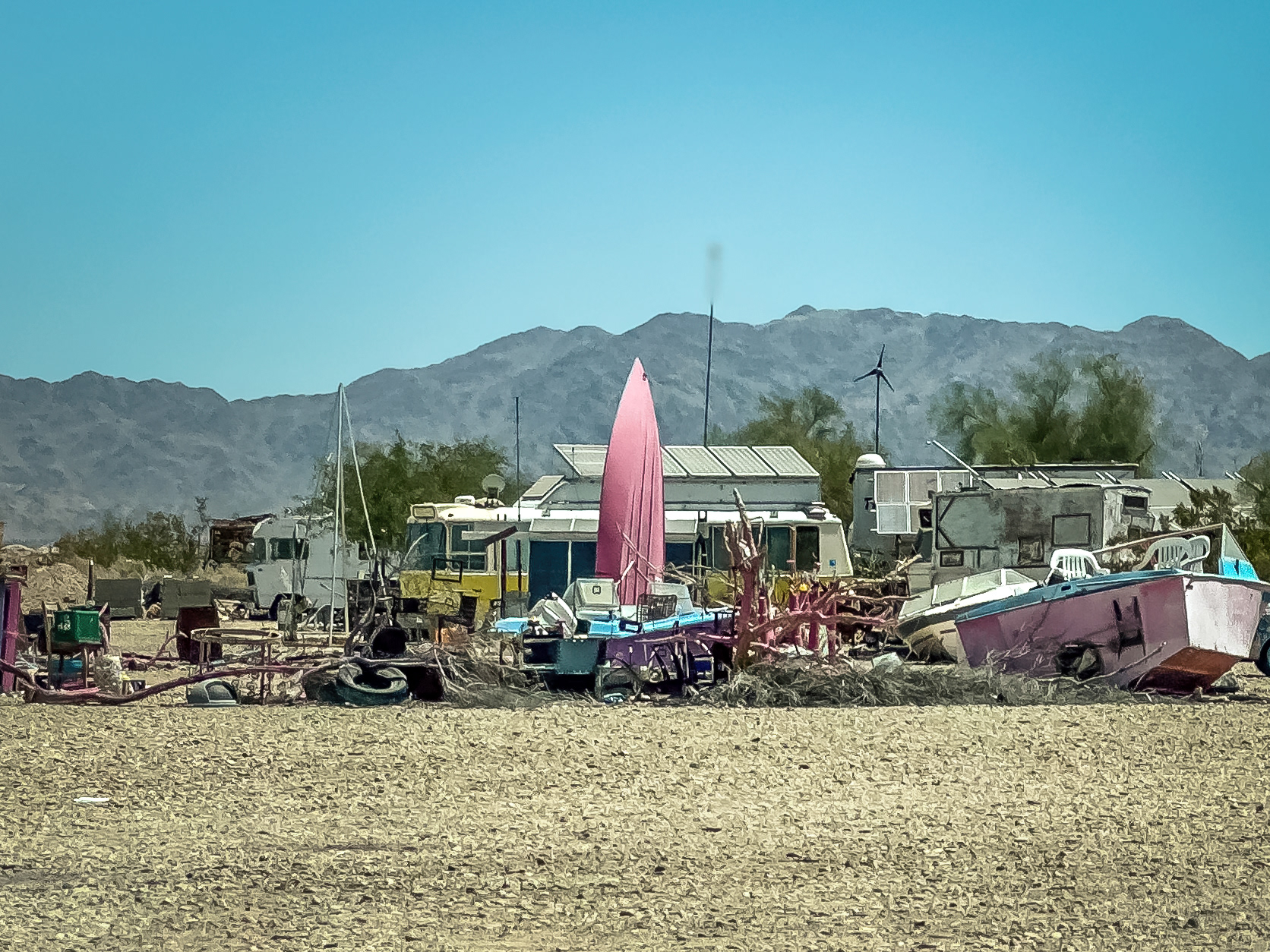
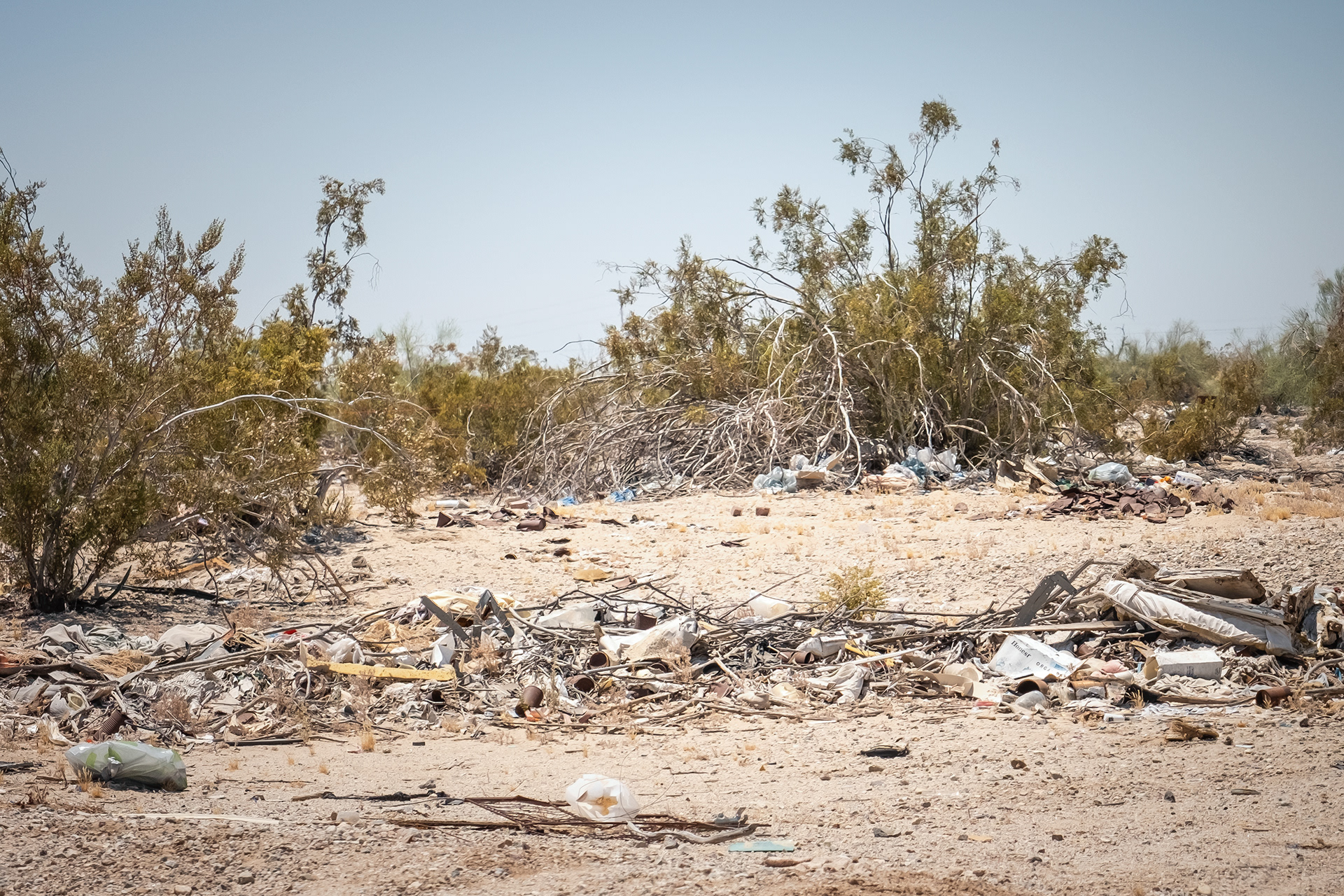
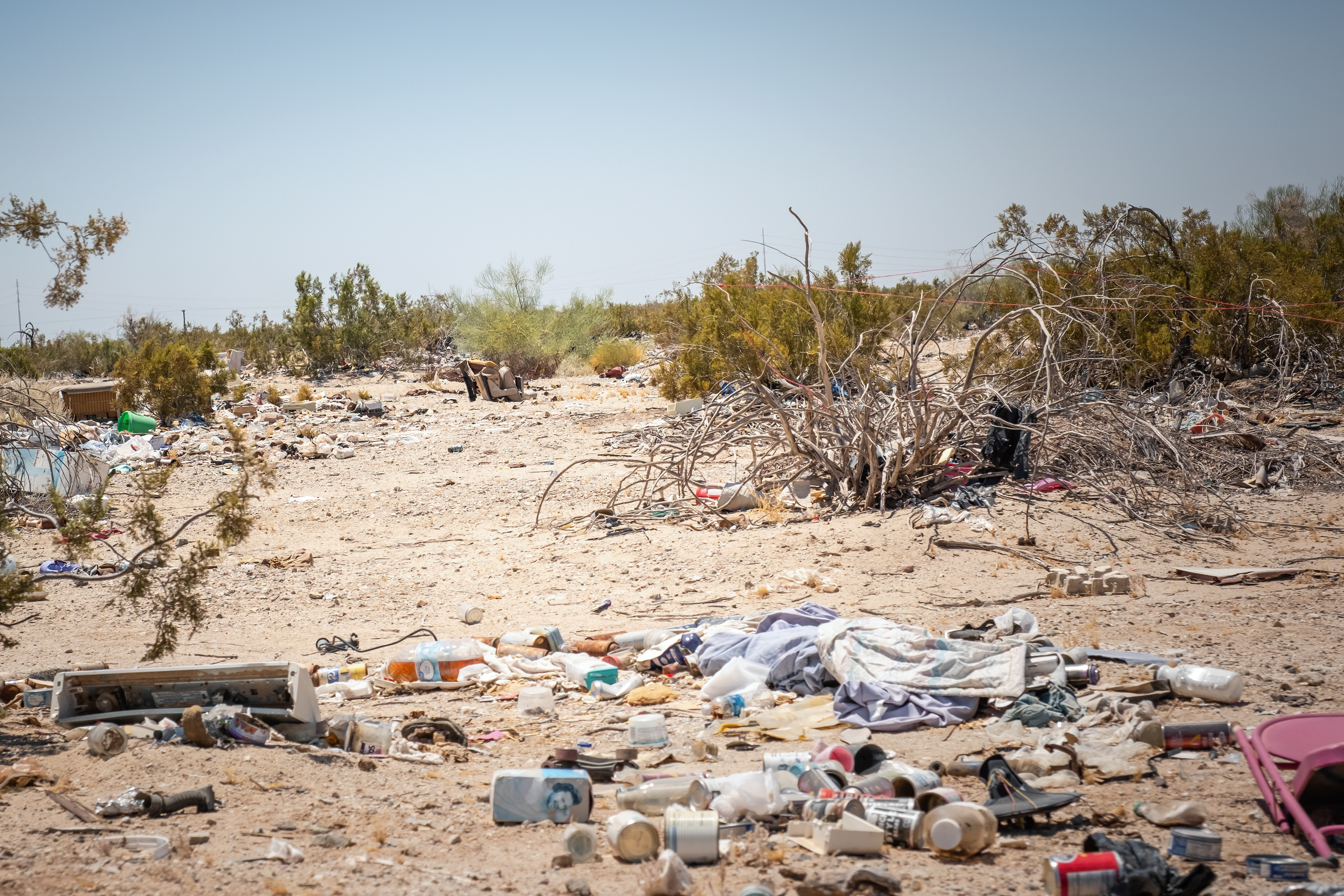
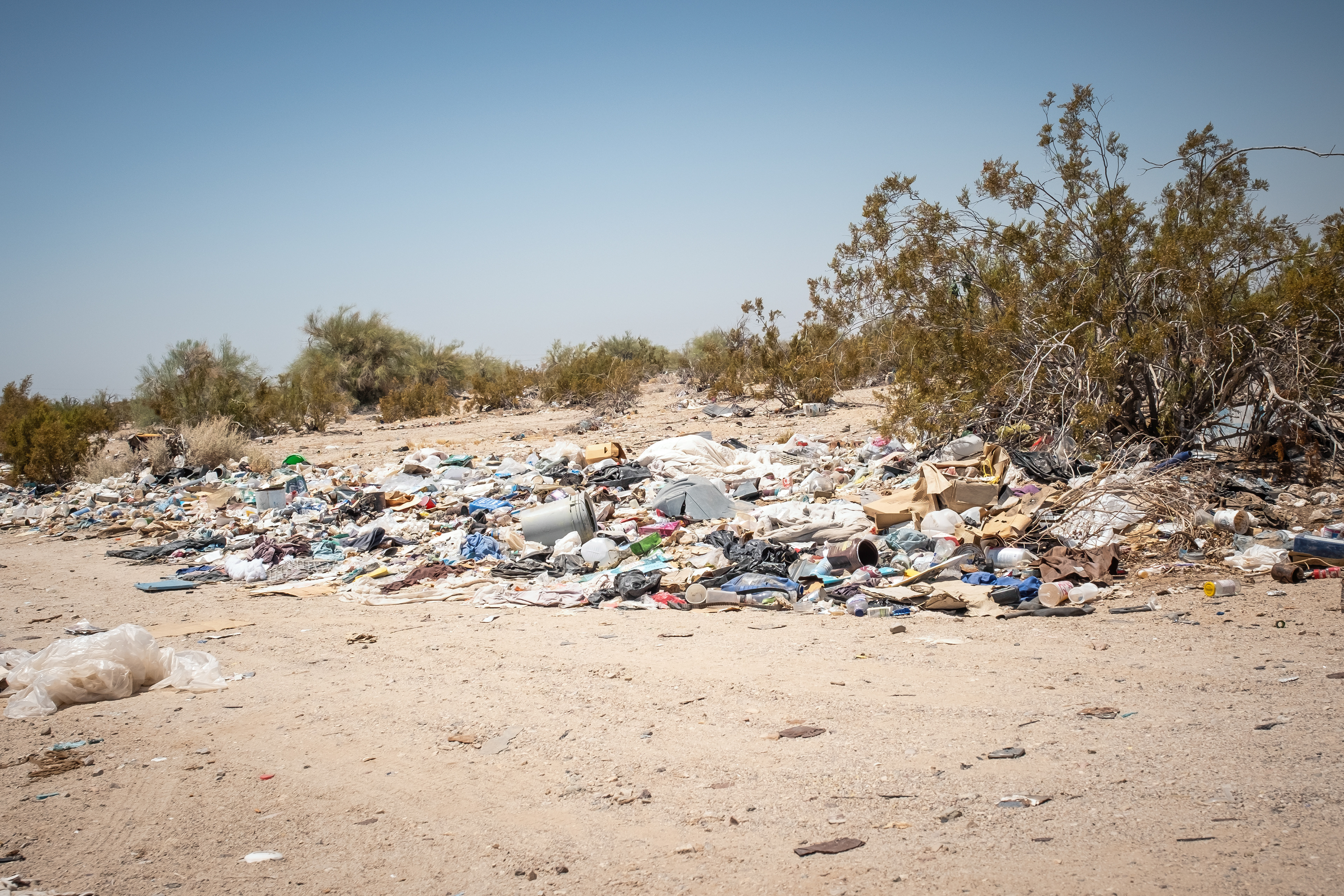
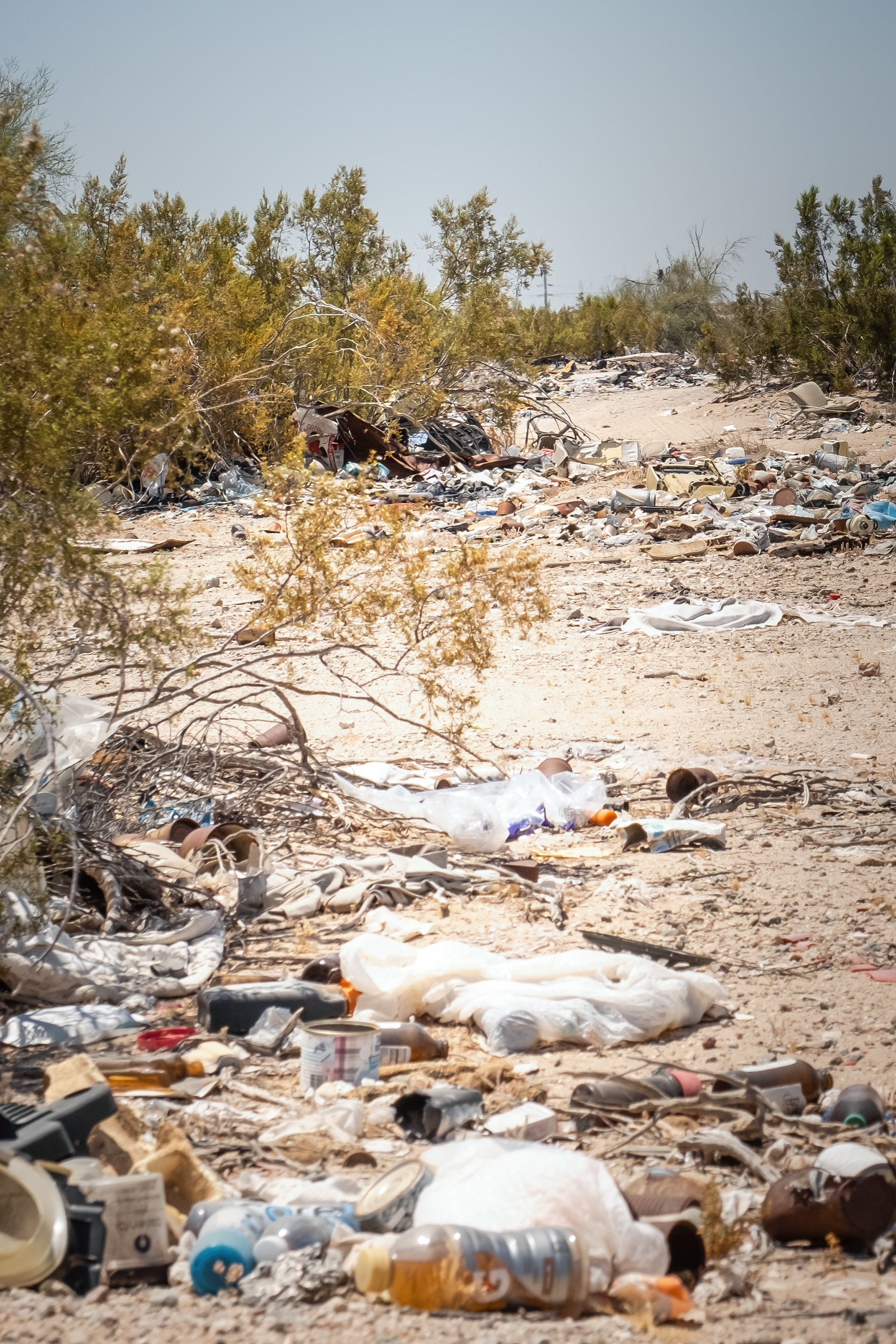
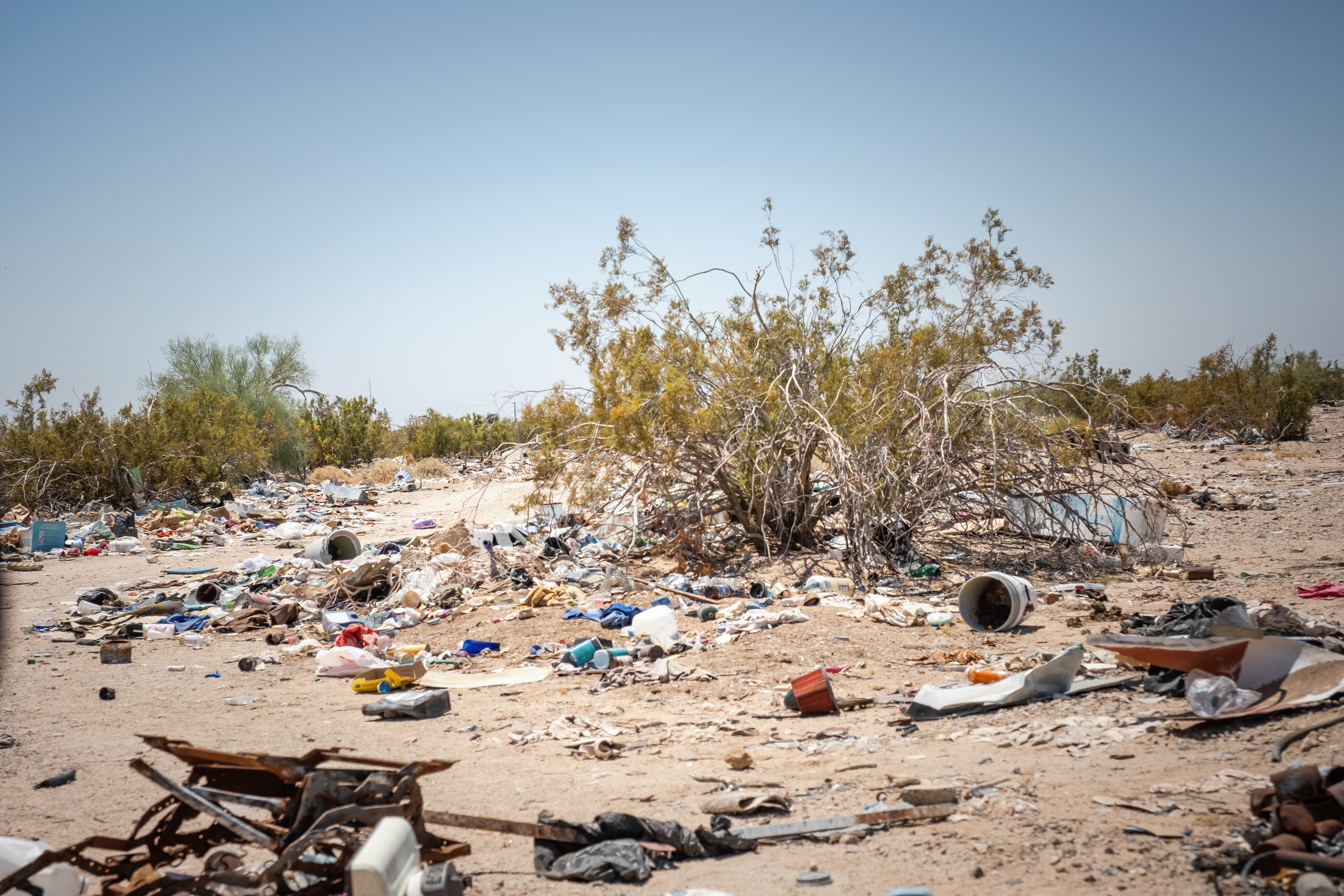
In Slab City, there is no formal trash pickup service, leaving the neighboring desert lands cluttered with garbage. Residents find their own means of disposal, often resulting in piles of waste accumulating in the empty desert spaces.
The once empty vastness of the desert is now overshadowed by mountains of trash bags, discarded furniture, and rotting food. The lack of proper waste management has turned the surrounding areas into a chaotic, unsanitary environment where the daily lives of its citizens are disrupted by the constant presence of refuse.